Dr. Lü Guo, founder and chairman of Beijing Suntrans Language Translation Co., Ltd., was invited to attend the Symposium on Mineral Resources Translation Research and Talent Development and the Founding Conference of the Mineral Resources Translation Alliance, held in Chengdu from October 30 to November 1, 2026, where he delivered a keynote report and also took part in the Alliance's special preparation meeting, roundtable sharing sessions and other activities. The conference was hosted by the School of Foreign Languages of Chengdu University of Technology, under the guidance of the Translators Association of China and the Sichuan Provincial Teaching Steering Committee for Foreign Language and Literature Majors in Regular Undergraduate Institutions. Deans of foreign language schools from dozens of geology, mining and petroleum universities — including China University of Geosciences (Beijing and Wuhan), China University of Mining and Technology (Beijing and Xuzhou), China University of Petroleum (Beijing and East China), Southwest Petroleum University, Guilin University of Technology and Chengdu University of Technology — together with senior scholars in translation and experts from the language services and mining industries gathered to exchange views on standard development, talent cultivation, technical literature translation, platform building and international communication.
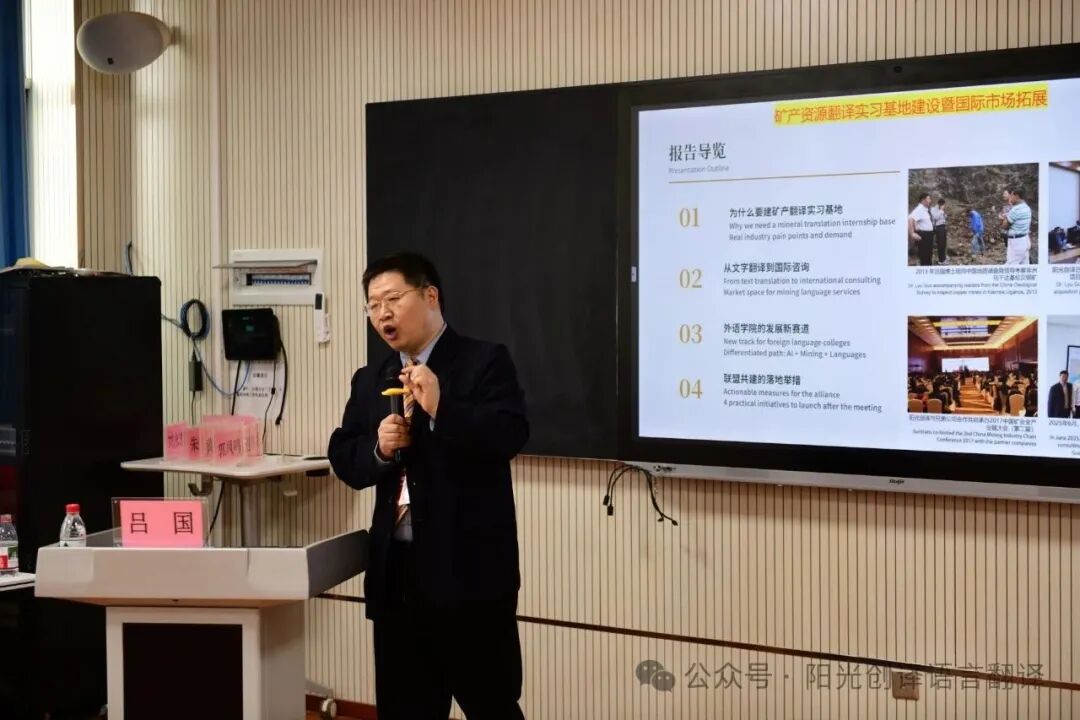
Dr. Lü Guo of Suntrans delivering a keynote report at the Symposium on Mineral Resources Translation Research and Talent Development and the Founding Conference of the Mineral Resources Translation Alliance
On the afternoon of October 31, Dr. Lü Guo delivered a keynote report entitled "Construction of the Mineral Resources Translation Internship Base and International Market Expansion", unfolding layer by layer around four questions: why build the base, where the market boundaries lie, what new paths foreign language schools should take, and which practical steps the Alliance should prioritize after its founding. The report was recognized and highly commended by leaders of the Translators Association of China and the conference organizing committee. Beyond the report, he also attended the Mineral Resources Translation Alliance special preparation meeting, where he joined all parties in discussing the positioning, organizational structure, work planning, development direction and implementation matters of the Alliance and its related professional committees; he spoke multiple times in the Alliance roundtable sharing session and other sessions; and based on the actual proceedings, he put forward suggestions on conference positioning and naming conventions for the reference of the conference presidium. The value of this conference lies not only in the founding of the Alliance, but also in responding to two simultaneous realities: Chinese mining enterprises going global need reliable language support, and foreign language education in China needs new room for growth.
01 Foreign language schools are standing at a critical crossroads of transformation
Foreign language schools at Chinese universities are currently at a critical stage of transformation and upgrading. Some schools face consolidation and restructuring, and their disciplinary status has declined; a few even face survival pressure: some have downsized, some have been merged into other schools, and others are exploring directional transformation. Combined with the rapid penetration of artificial intelligence, many school administrators and frontline teachers feel immense pressure — the efficiency of general text translation keeps rising with large language models, related positions are becoming saturated, and the traditional "language + general translation" model must re-answer the questions of "what kind of people to train and what markets to serve".
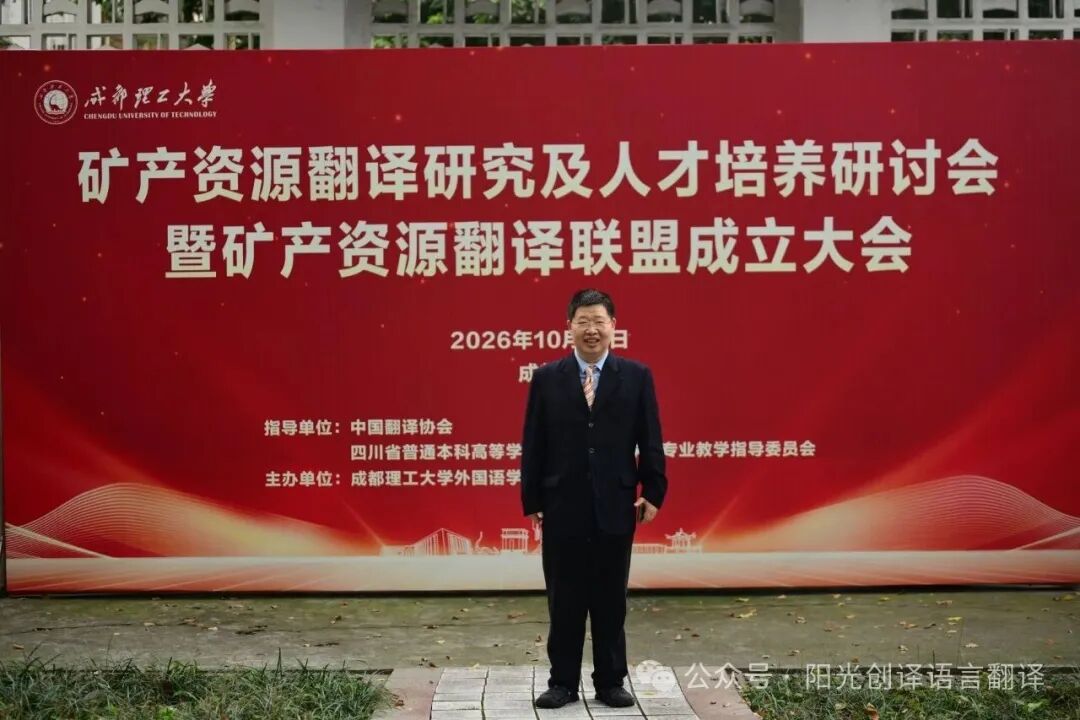
Dr. Lü Guo of Suntrans attending the Symposium on Mineral Resources Translation Research and Talent Development and the Founding Conference of the Mineral Resources Translation Alliance
Yet beneath the pressure there is structural differentiation: what is saturated are general translation positions lacking industry backgrounds, while what is in short supply are interdisciplinary language talents rooted in vertical fields who can solve real project problems. The conference was attended mainly by deans of foreign language schools from universities across the country, with dozens of geology, mining and petroleum universities present — itself an industry response: rather than competing homogeneously in the existing market, it is better to build on each school's industry foundation to seek differentiated growth tracks. Dr. Lü Guo's report concluded that mining is precisely the vertical track on which foreign language schools can ride the momentum.
02 Chinese mining enterprises going global: why language services are a rigid need
The premise of this track is that real demand exists. China is the world's largest consumer of mineral resources, and Chinese overseas mining projects are distributed across resource-rich regions such as Africa, Central Asia, Latin America and Southeast Asia. Project advancement spans the complete cycle from geological exploration, feasibility studies and engineering construction (EPC) to cross-border M&A and compliant operations, and every node requires professional language services: geological data must be accurately understood, feasibility reports must be precisely translated, bid documents and contracts must withstand scrutiny, and on-site negotiations and operational compliance depend heavily on communication skills.
The long-standing core contradiction is the talent gap: general translators do not understand mining expertise, while geological and mining technical personnel often lack the foreign language proficiency to communicate independently with foreign counterparts. The two capabilities have long failed to come together in one person, driving up communication costs and project risks.
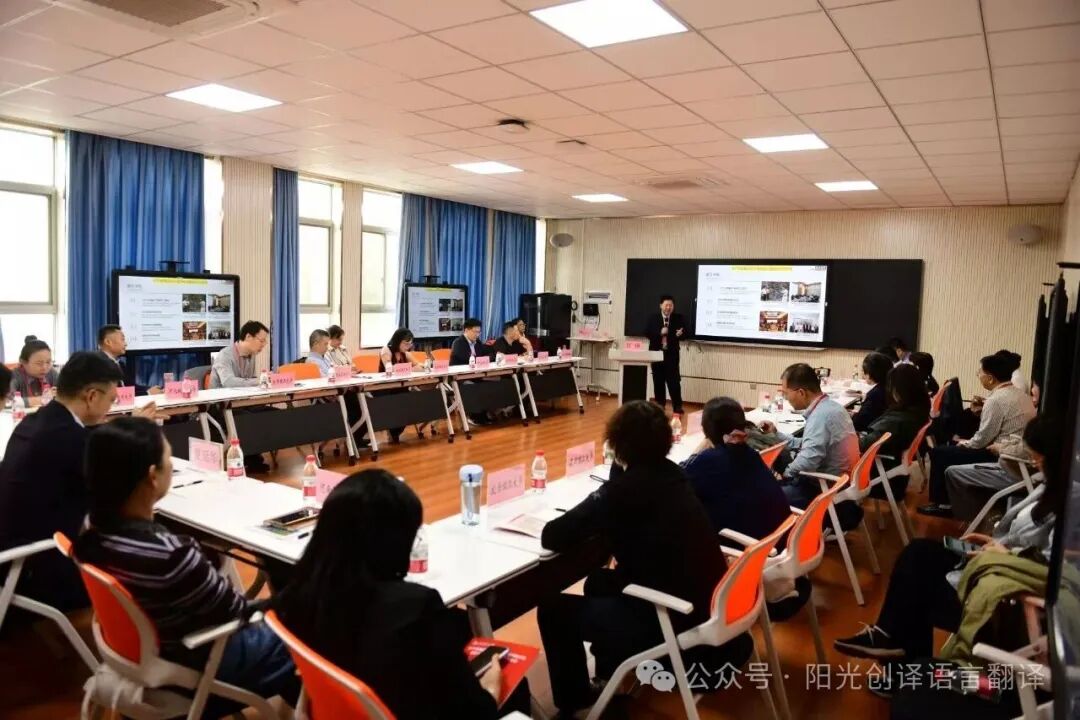
The venue of the Symposium on Mineral Resources Translation Research and Talent Development and the Founding Conference of the Mineral Resources Translation Alliance
The report reviewed several typical frontline lessons that illustrate the real cost of "non-professional translation":
Terminology errors: such as taking "cut-off grade" at face value, or conflating "resource" and "reserve" — two terms with strict legal meanings in international reserve reports;
Bid document mistakes: mis-translated technical parameters can lead to failed overseas bids, costing both the bidding expenses and the project window;
On-site incidents: ambiguous translation of mineral processing instructions may cause delays in production line commissioning;
High remediation costs: fixing problems only when deadlines loom is, according to frontline experience, far more expensive than investing in professional translation up front, and some schedule losses can never be recovered.
The above are typical scenarios summarized in the report, used to illustrate the underlying mechanism rather than to point to specific projects. But the conclusion is the same: the translation talent gap is an industry-wide problem; firefighting after the fact treats the symptoms, while cultivation at the source treats the root cause.
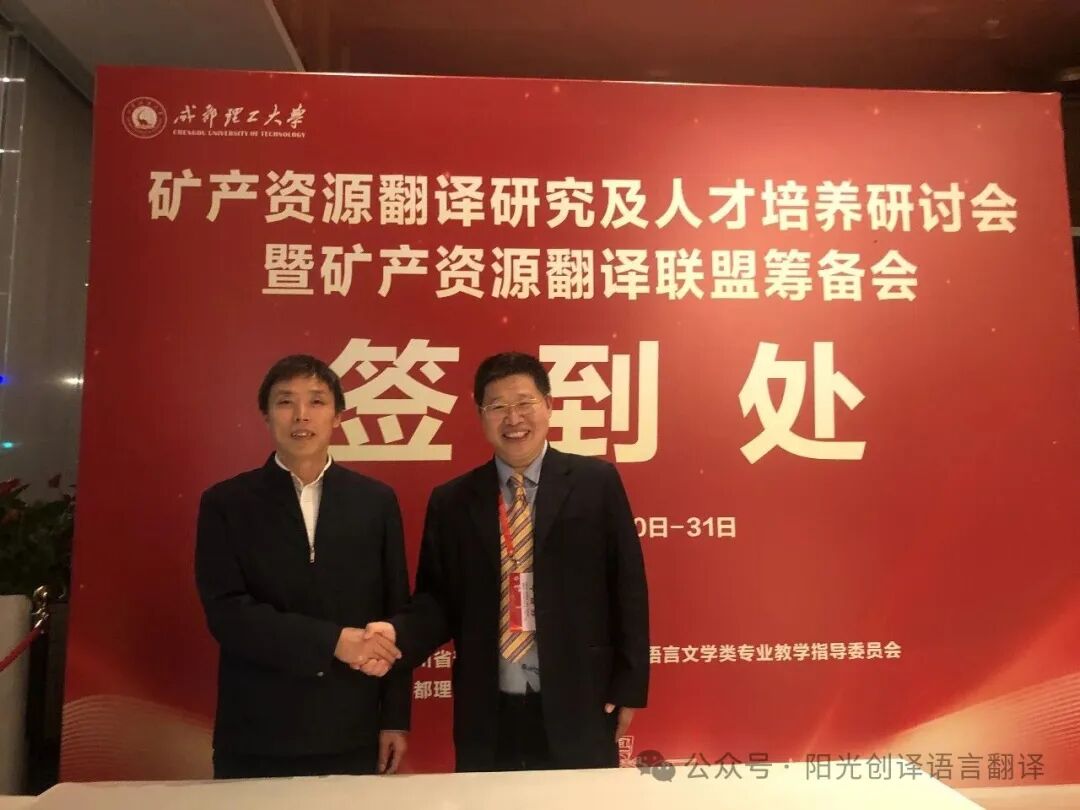
Dr. Lü Guo of Suntrans discussing cooperation with Dean Liu Yongzhi of the School of Foreign Languages of Chengdu University of Technology at the conference
03 Mining translation is not "billed by the word" — it is a service embedded in the full project cycle
A common misconception is that mining translation simply means word-count-billed written and spoken language services. From the perspective of industry practice, professional mining translation is a consulting-type language service embedded in the entire project life cycle, with a value chain extending from language conversion to cross-cultural communication, compliance risk control and international project matchmaking. It can be divided into four tracks:
Technical texts: feasibility studies, reserve reports, mineral processing designs, environmental impact assessment documents;
Business scenarios: overseas bid documents, M&A contracts, negotiation interpreting;
Cross-border consulting: matchmaking for foreign-invested projects in China, compliance support for Chinese enterprises going overseas;
Industry events: support for international mining conferences, exhibitions and academic journal translation.
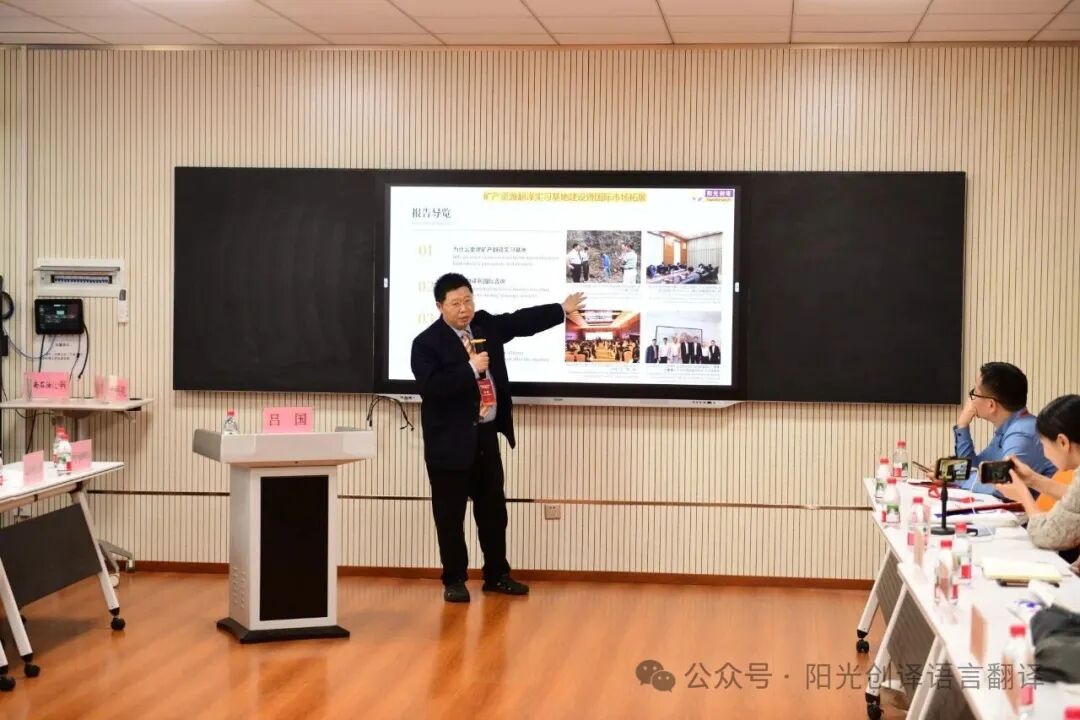
Dr. Lü Guo of Suntrans delivering a keynote report at the Symposium on Mineral Resources Translation Research and Talent Development and the Founding Conference of the Mineral Resources Translation Alliance
On the role of AI, the report offered a restrained positioning: AI excels at batch, high-speed processing of repetitive texts, but is prone to terminology confusion, ambiguity over legal concepts and misjudgment of context — for example, conflating the statutory definitions of "resource" and "reserve" can directly create compliance risks. A more accurate judgment is this: what AI eliminates are people who can only look up dictionaries and perform literal conversion; those who understand the industry and know how to use AI for post-translation review can instead multiply their efficiency severalfold.
Viewed from both the supply and demand sides, the pain points are clear: small and medium-sized translation companies lack mining backgrounds and cannot take on large projects; mining enterprises cannot find stable and reliable service providers; university students have language skills but lack market channels; and the industry lacks unified quality standards, with low-price competition dragging down overall quality. Four types of players each fighting alone is exactly the situation the Alliance model is meant to solve.
04 Solution 1: Building the internship base — closing the talent gap before graduation
To "treat the root cause at the source", the report's core initiative is the Mineral Resources Translation Internship Base, with the training goal of interdisciplinary mineral translation talents who understand mining, can translate, can work on-site, and are adept at using AI. For universities, it delivers targeted talent output and eases employment matching; for enterprises, pre-job practical training makes graduates ready to contribute from day one; for the Alliance, it carries the implementation functions of unified terminology and competency certification.
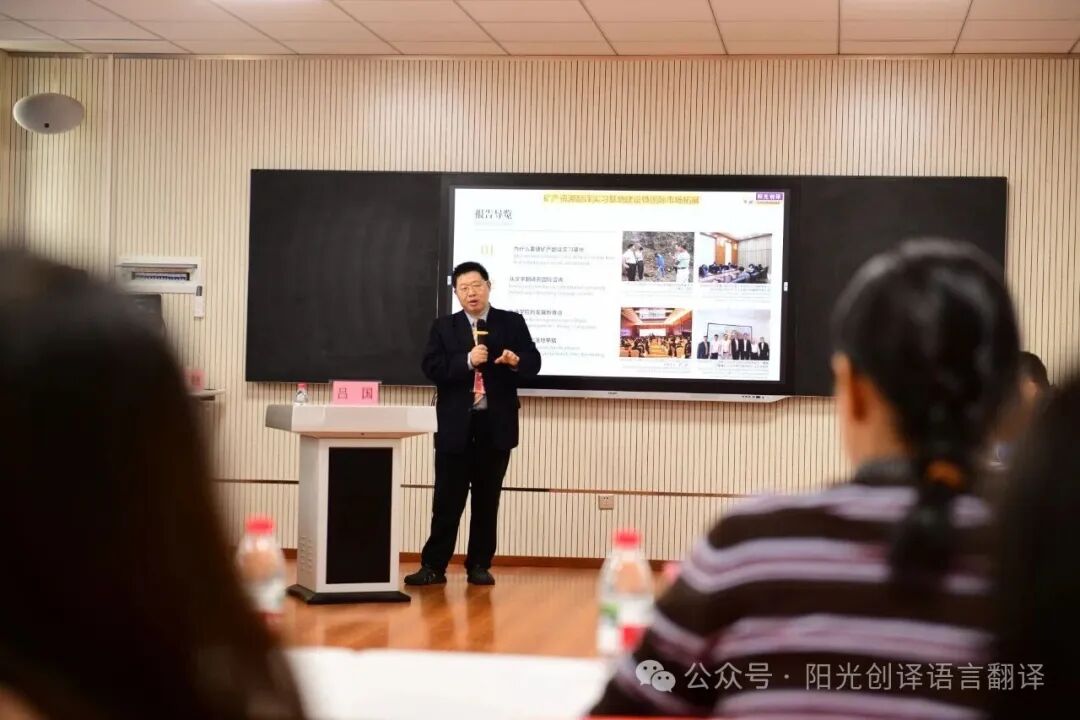
Dr. Lü Guo of Suntrans delivering a keynote report at the Symposium on Mineral Resources Translation Research and Talent Development and the Founding Conference of the Mineral Resources Translation Alliance
The construction mechanism is multi-party co-building with a clear division of labor:
Foreign language schools: responsible for student selection, curriculum framework and faculty for specialized foreign languages;
Translation and mining consulting companies: providing real project materials, mentoring by senior translator-reviewers, and practical training assessment standards;
Mining and EPC companies: opening on-site scenarios, specifying position requirements, and giving hiring priority to program graduates;
Translation Alliance: leading terminology standards, completion certification and resource sharing.
Practical training revolves around four modules:
Mining fundamentals: foundational terminology of ore deposit geology, mineral processing, EPC and mining compliance;
Text translation practice: feasibility reports, JORC standards, bid documents, business contracts, environmental impact assessment documents;
On-site interpreting practice: project negotiations, on-site commissioning, cross-cultural communication simulations;
AI tool application: use of large language models for mining translation, terminology database building, and post-translation review standards.
Assessment includes Chinese-English tests on core terminology, independent completion of a real project translation that passes review by a senior translator, and interpreting scenario simulations; graduates are included in the Alliance talent pool with priority employment recommendations across the industry. According to the planning vision, a mature base can produce targeted graduates at a stable scale, accumulate a unified bilingual terminology database open to member organizations, and form a virtuous cycle of university-enterprise joint project undertaking with two-way reduction of matchmaking costs. Figures such as training scale are planning targets; the implementation pace depends on the actual progress of all co-building parties.
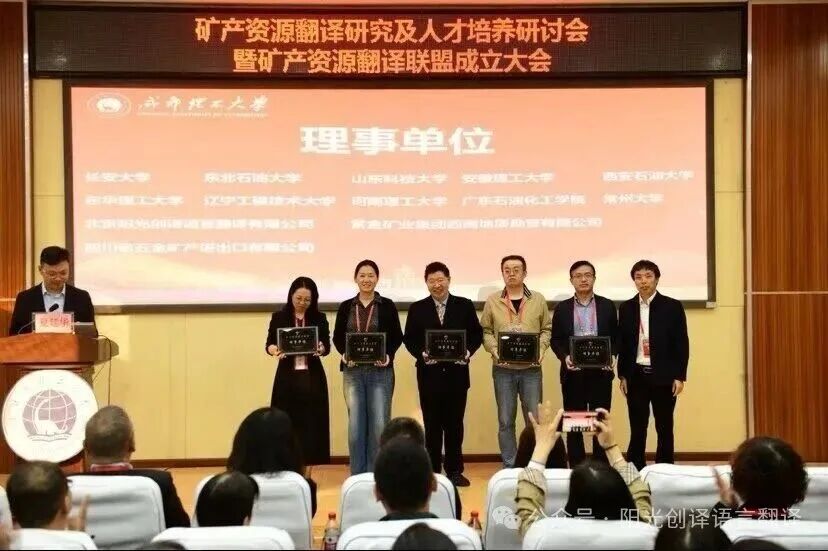
Suntrans awarded the title of "Council Member Unit of the Mineral Resources Translation Alliance" at the Symposium on Mineral Resources Translation Research and Talent Development and the Founding Conference of the Mineral Resources Translation Alliance
05 Solution 2: A differentiated path for foreign language schools — AI + Mining + Foreign Languages
The base is the lever, and behind it lies a development path: interdisciplinary cultivation built on "AI + Mining + Foreign Languages". Its rationale is clear: the general translation track is fiercely competitive and easily replaced by tools, while vertical-domain professional translation enjoys stable demand and higher barriers — an incremental market that AI cannot wholly replace in the short term. Geology, mining and petroleum universities already have disciplinary foundations in geology, mining and energy, making it easier for foreign language programs grafted onto industry knowledge to develop distinctive strengths.
The new talent competency framework has four dimensions: foreign language fundamentals, general mining knowledge, AI tool application skills, and project practice ability. Supporting measures include senior mining translator-reviewers bringing real cases into the classroom, foreign language teachers taking secondment positions in enterprise projects to understand frontline needs, and the Alliance jointly developing textbooks and sharing case resource libraries. This path can bring schools distinctive programs, targeted employment channels, research collaboration opportunities and industry connections. Enterprise-side demand also has real-world support: in October 2026, Dr. Lü Guo's team provided professional coal chemical industry English training for Xuyang Group, a leading listed coal chemical company in China, showing that professional language training demand in vertical industries such as energy and chemicals continues to be released, and that university-enterprise cultivation and practical corporate training have room for two-way alignment.
06 Solution 3: Alliance solidarity to jointly expand the international language services market
The report judged that the international market space for mining language services is considerable, but only through Alliance collaboration can standards, talent supply and the industry brand truly be scaled up. The collaboration approach has four points:
Unified standards: leading the development of quality specifications and reasonable pricing references;
Resource sharing: exchange of project information and joint undertaking of large projects;
Brand co-building: jointly creating the international image of "Chinese professional mineral translation";
Emergency support: establishing an emergency response mechanism for translation errors to reduce members' project risks.
At the conference's special preparation meeting, all parties reached phased consensus on the establishment of the Alliance and its related professional committees, and the division of labor in key directions — standard development, talent cultivation, technical literature translation, platform building and international communication — was further clarified, laying the groundwork for subsequent formal operation.
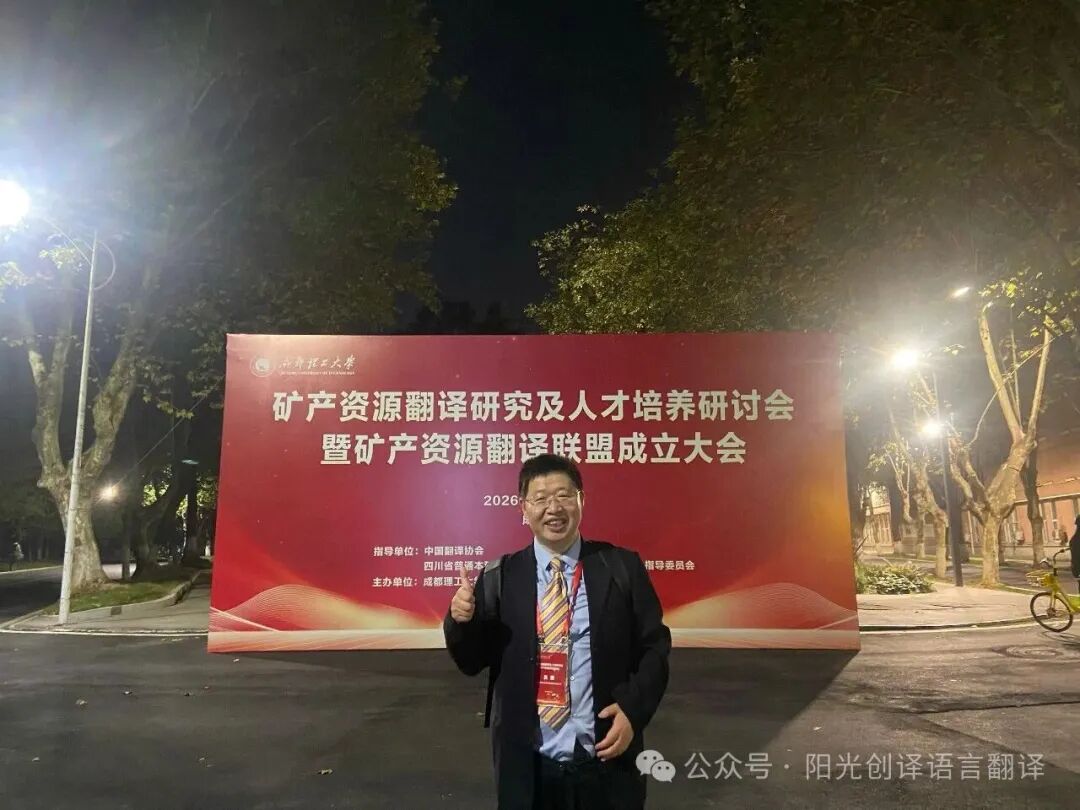
Dr. Lü Guo of Suntrans attending the Symposium on Mineral Resources Translation Research and Talent Development and the Founding Conference of the Mineral Resources Translation Alliance
Practical steps the Alliance plans to take first after its founding:
Leading the compilation of the Standard for Chinese-English Translation Terminology of Mineral Resources, planned for release in the first half of 2027;
Holding an annual national mineral translation talent training camp, free of charge for enrolled students;
Establishing project sharing and quality assurance mechanisms to support members in jointly expanding international markets.
These initiatives respectively address talent, standards, training and the market — implement them first and deliver real results.
07 The interdisciplinary foundation of geological training, cross-national projects and frontline translation
The persuasiveness of the report's arguments is directly related to the speaker's experience structure. Dr. Lü Guo holds a doctorate in mineralogy, petrology and ore deposits from China University of Geosciences (Beijing), has postdoctoral experience at Miami University in the United States, and completed postdoctoral research in geology at Peking University. He has worked at BHP Billiton, a global mining giant, and at the Overseas Mineral Resources Strategy Research Office of the China Geological Survey. He currently serves as Deputy Director of the Tectonophysicochemistry Professional Committee of the Chinese Geophysical Society, Deputy Secretary-General of the Resource Industry Economics Professional Committee of the Geological Society of China, and Deputy Secretary-General of the Mining Professional Committee of the China Asia Economic Development Association, and has been appointed as an external mentor for translation programs at several universities.
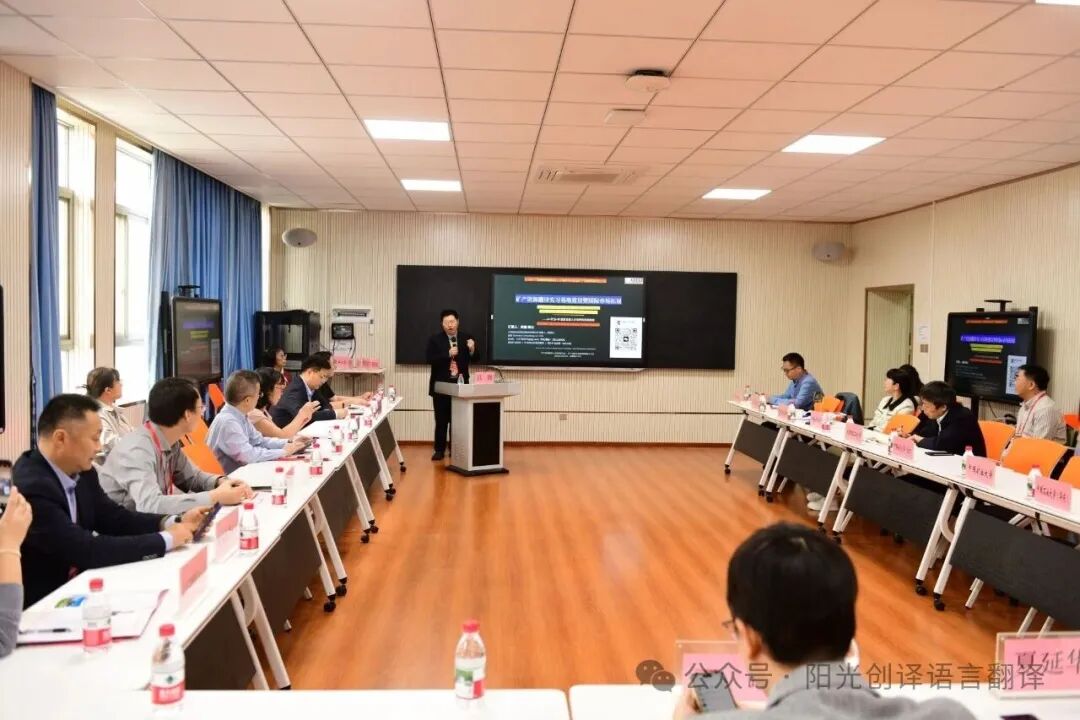
Dr. Lü Guo of Suntrans delivering a keynote report at the Symposium on Mineral Resources Translation Research and Talent Development and the Founding Conference of the Mineral Resources Translation Alliance
In terms of practice, he participated in compiling the Mining Investment Guide series covering various countries as well as a number of geological and mining works; for many years he has provided translation services for the China Mining Conference and Exhibition, the Prospectors & Developers Association of Canada (PDAC), the China-ASEAN Mining Cooperation Forum, the Iron Ore Forum, as well as for the former Ministry of Land and Resources, the China Geological Survey, and foreign-aid training programs of the Ministry of Commerce; he has carried out geological and mining translation in Canada, the United States, Uganda in Africa, Pakistan, Sri Lanka, Singapore, Hong Kong, China and other places, has participated in work related to a number of large international mining projects, has organized and hosted a series of International Mining Development Summits and International Translation Summits, and has provided translation services for state leaders of many countries.
Broken down: geological training solves "understanding mining", overseas study and cross-national projects solve "familiarity with international rules", and frontline translation solves "getting the message right", complemented by exploration of AI tools — precisely matching the four-dimensional framework of "foreign languages + mining + AI + practice". Beijing Suntrans has long focused on international mining consulting, professional multilingual mining services and integrated support for overseas mining projects, and its propositions and practice come from the same origin. The report's three core conclusions therefore become clear: the talent gap is an industry-wide problem — firefighting treats the symptoms while the base treats the root cause; the international market has broad space — only Alliance collaboration can make the brand strong; and "AI + Mining + Foreign Languages" is a distinctive new path that foreign language schools can actually implement.
A closing note
The Chengdu trip was compact and rewarding: it was both an academic and industry exchange of ideas and a solid step toward making mineral resources translation more professional and standardized. The report also issued a set of initiatives: universities are invited to join the co-construction of internship bases to jointly cultivate interdisciplinary mineral translation talents; mining and engineering companies are invited to open projects and on-site scenarios and to give hiring priority to program graduates; and industry organizations are sincerely requested to guide the development of industry standards and the talent certification system. Jointly promoting the cultivation of mineral translation talents and expanding the international language services market requires universities, enterprises and industry organizations to work in the same direction.
Profile
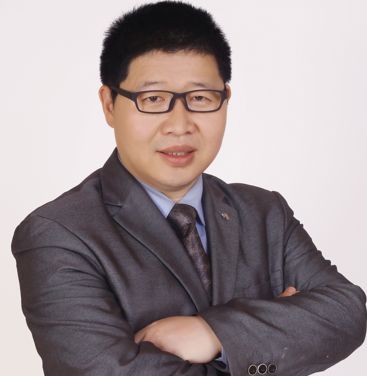
Dr. Lü Guo of Beijing Suntrans
Lü Guo, male, born in 1977, with his ancestral home in Dunhuang, Gansu Province, now works in Beijing. A postdoctoral researcher trained at Peking University, he is Chairman of Beijing Suntrans Language Translation Co., Ltd. and CEO of Suntrans Consulting LLC in the United States, mainly engaged in research in the mining and energy fields as well as related simultaneous interpretation, mining consulting and convention and exhibition work.
Lü Guo holds a doctorate in mineralogy, petrology and ore deposits from China University of Geosciences (Beijing). During his doctoral studies he studied at Miami University in the United States, and he later completed postdoctoral research in geology at Peking University. He previously worked part-time at BHP Billiton, the world's largest mining company headquartered in Australia, and at the Overseas Mineral Resources Strategy Research Office of the China Geological Survey. In 2008 he founded Beijing Suntrans Language Translation Co., Ltd. (Suntrans Translation), and in 2011 he founded New York Suntrans Consulting LLC in the United States. His mining translation and consulting experience spans more than 40 countries.
Lü Guo participated in compiling the Mining Investment Guide series covering various countries and a number of works in the fields of geology and mining, and for many consecutive years has provided translation services for important conferences and forums including the China Mining Conference and Exhibition, the Prospectors & Developers Association of Canada (PDAC), the China-ASEAN Mining Cooperation Forum, the Iron Ore Forum, foreign-aid training programs of the Ministry of Land and Resources, the China Geological Survey, and the Ministry of Commerce. He has also successively provided geological and mining translation in more than 40 countries and regions, including Canada, the United States, Uganda, Rwanda and Ethiopia in Africa, Hong Kong, China, Pakistan, Sri Lanka, Singapore, France, Costa Rica, Ecuador, Malaysia and Iran, and has participated in the acquisition of many large international mining projects. As of 2023, he had organized and hosted 9 sessions of the "China International Mining Development Summit Forum" and 5 sessions of the "China International Translation Summit Forum".
Educational background
1. January 2012 – June 2016: Department of Geology, School of Earth and Space Sciences, Peking University, Geology, Postdoctoral researcher;
2. August 2008 – December 2009: Jointly trained doctoral student at Miami University, USA, specializing in geomicrobiology;
3. July 2006 – September 2008: Jointly trained doctoral student at the Institute of Microbiology, Chinese Academy of Sciences, specializing in geomicrobiology;
4. 2006 – 2011: China University of Geosciences (Beijing), Mineralogy, Petrology and Ore Deposits, Doctor of Science;
5. 2003 – 2006: China University of Geosciences (Beijing), Mineralogy, Petrology and Ore Deposits, Master of Science;
6. 2001 – 2004: Lanzhou University, English Education, second bachelor's degree;
7. 1996 – 2000: Northwest Normal University, Biological Sciences, Bachelor of Science.
Work experience
1. February 2008 – present: Beijing Suntrans Language Translation Co., Ltd., Chairman, translator and mining consultant;
2. May 2011 – present: CEO of Suntrans Consulting LLC, New York, USA;
3. December 2009 – May 2010: Development Research Center of the China Geological Survey, Overseas Mineral Resources Strategy Research Office;
4. April 2006 – August 2008: BHP Billiton (Australia), porphyry copper exploration and translation;
5. September 2000 – June 2003: Dunhuang High School, Gansu Province, high school English teacher.
Social positions
1. 2019 – present: Chinese Geophysical Society, Deputy Secretary-General of the Tectonophysicochemistry Professional Committee;
2. 2018 – present: Geological Society of China, Deputy Secretary-General of the Resource Industry Economics Professional Committee;
3. 2020 – present: China Asia Economic Development Association, Deputy Secretary-General of the Mining Professional Committee;
4. 2016 – present: Translators Association of China, translation trainer;
5. June 2016 – present: China University of Mining and Technology (Beijing), School of Humanities and Law, Department of Foreign Languages, external mentor for the Master of Translation and Interpreting program;
6. December 2020 – present: external mentor for Master of Translation and Interpreting programs at the School of Foreign Languages of Northwest Normal University, the School of Humanities and Law of China University of Mining and Technology, and Changchun University; English teacher at the School of Foreign Languages of West Anhui University.
← Back