On September 11, 2025, Dr. Lü Guo of Suntrans was invited to attend the 14th Tianmine Iron & Steel Industry Chain Exchange Conference. Held at the Zhongguancun Innovation Demonstration Base in Tianjin Binhai New Area, this influential industry event was hosted by Tianmine‑an authoritative platform for the iron‑steel industrial chain‑and co‑organized by ShengtaiFeng (Tianjin) Import and Export Co., Ltd. It built an efficient platform for communication and cooperation among participants across the whole industrial chain.
Since 2016, Dr. Lü Guo from Suntrans has continuously taken part in key mining conferences at home and abroad, maintaining deep engagement with this industry exchange platform for years. He has been a regular keynote speaker at successive sessions, centering his sharing on global iron‑ore exploration‑development as well as logistics and trade. Combining cutting‑edge industry trends with real‑world case studies, he analyzes critical nodes within the iron‑ore industrial chain and delivers professional, practical industry insights to attendees, establishing himself as one of the most‑watched voices at the event.
Beyond keynote presentations, Dr. Lü Guo attaches great importance to on‑site interaction with clients. He patiently addresses questions covering every segment of the mining industrial chain, ranging from exploration‑technology challenges and logistics‑chain optimization to trade‑cooperation risk control, so as to respond to clients’ practical demands. Furthermore, he delivers customized value‑added services tailored to client business scenarios, helping enterprises resolve operational bottlenecks in iron‑ore projects. This not only deepens client partnerships but also builds Suntrans’ professional reputation across mining‑service sectors.
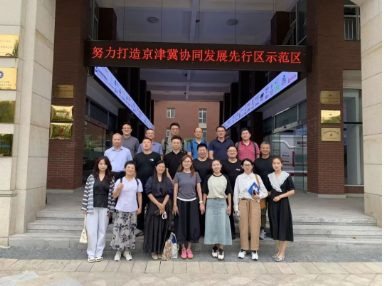
第十四届天矿钢铁产业链交流会合影
Under the theme “Seeking Steel‑Sector Opportunities in the New Normal”, the event assembled over 50 participants including government representatives, economists, iron‑steel‑chain enterprises, financial‑institution delegates and industry analysts to assess development trends and explore market prospects for the iron and steel sector.
The Tianmine Iron & Steel Industry Chain Exchange Conference dates back to around 2016. As a seasoned industry practitioner, Dr. Lü Guo of Suntrans has participated in every edition from the inaugural session through the 14th, remaining an active contributor to this vital industrial‑chain exchange platform.
At the conference, Dr. Lü Guo delivered a keynote speech themed “AI‑Empowered Mining: Intelligent Transformation Across the Full Industrial Chain”. His presentation unfolded along four dimensions: industry trends and policy landscape, technical AI solutions, practical implementation cases, plus transformation‑related challenges and prospects. He also introduced Suntrans’ relevant services and potential cooperation avenues.
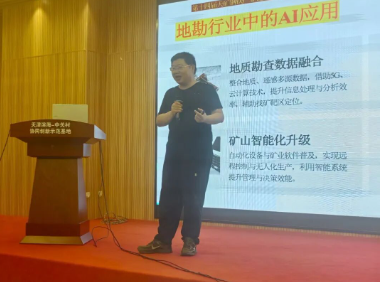
阳光创译吕国博士正在会议中发表演讲
I. Industry Trends and Policy Landscape
Opening his address, Dr. Lü Guo outlined core development directions and practical challenges facing global mining.
Core Development Goals
Global mining is accelerating toward three objectives: intrinsic safety, maximum efficiency, and green low‑carbon transition. Domestic strategies including China’s “Dual Carbon” initiative, dual‑control policies for energy consumption, plus the newly‑revised Work Safety Law of the People’s Republic of China on Mines have lifted industry access thresholds and development standards, forcing enterprises to pursue upgrading and transformation.
Technical Enablers
Three major technical breakthroughs underpin intelligent mining transformation: deep integration of AI and multi‑modal perception technologies; computing power deployed on edge devices within mine sites; and full mine‑site coverage via 5G and industrial Wi‑Fi. These advances remove long‑standing technical bottlenecks for traditional mining operations.
Pressing Industry Dilemmas
Mining enterprises face mounting profit pressure due to declining ore grades, higher stripping ratios and rising cash operating costs. Meanwhile capital markets impose increasingly stringent ESG (Environmental, Social, Governance) requirements. Conventional development models are no longer viable; intelligent transformation has become essential for enterprises seeking long‑term competitiveness.
II. AI‑Powered Technical Solutions
Targeting core pain‑points across mining‑industry segments, Dr. Lü Guo outlined implementable AI pathways forming a solution suite that “covers full workflows and adapts to diverse scenarios”.
Resource Exploration: Cost Reduction and Targeted Mineral Prospecting
Machine‑learning algorithms paired with drone technology enable precise delineation of prospective mineralization zones. Computer‑vision techniques automatically extract key information from core‑sample imagery. Multi‑source datasets including geological, geophysical and geochemical survey results are consolidated on big‑data platforms, greatly shortening exploration cycles and boosting prospecting accuracy by more than 30%.
Safe Production: Intelligent Monitoring for Pre‑emptive Risk Mitigation
Integrated “IoT + AI” monitoring systems capture real‑time data such as hazardous‑gas concentrations and equipment operating parameters within mines. Machine‑learning models forecast equipment‑failure risks to support preventive maintenance schedules. Computer vision detects unsafe human behaviour such as failure to wear protective gear or entry into restricted zones, establishing a safety framework featuring pre‑event early warning, in‑event intervention and post‑event traceability.
Operational Productivity: Intelligent Operations for Cost‑efficiency
Automated equipment including driverless mining trucks and smart drill rigs cuts labour input while enhancing operational stability. AI algorithms tune equipment operating parameters to lower energy consumption by 15%‑20%. Dynamic AI‑driven scheduling systems match equipment resources against real‑time production demands, lifting operational response speed by 25%.
Environmental Compliance: Digital Governance for Green Development
AI‑enabled classification systems raise mine‑waste recycling rates above 80%. AI carbon‑footprint‑monitoring modules track carbon‑emission metrics and generate visual reports. Digital‑twin technology simulates ecological‑restoration outcomes for mine sites to optimize remediation schemes, supporting coordinated mineral exploitation and environmental protection.
III. Practical AI Implementation Cases
Dr. Lü Guo cited domestic and international real‑world cases to illustrate tangible outcomes from AI‑driven mining transformation.
Resource‑Exploration Cases
Globally, 88 mining‑focused start‑ups (predominantly in mining‑intensive nations such as Australia and Canada) apply AI within exploration workflows. Australia‑based DataRock has processed more than 20 million meters of drill‑core imagery and completed over 200 mineral‑data projects. OreFox has launched two AI prospecting systems delivering notable results in gold‑ and copper‑ore exploration.
Domestically, AI deployment at a 100‑million‑ton‑grade iron‑ore mine in Shandong and a rare‑earth mine in Honghe, Yunnan, lifted exploration efficiency by 40% and prospecting precision by 25%. Nevertheless, AI‑assisted mineral prospecting remains exploratory; universally‑applicable cross‑regional models are yet to materialize.
Intelligent Production and Equipment Management
After deploying autonomous haulage trucks, one large domestic iron‑ore mine raised monthly output by 15% while cutting labour costs by 30%. Smart drill rigs and mining robots enable unmanned operations at high‑risk sites featuring high gas concentrations or steep slopes, safeguarding safety and operational precision. Following deployment of an AI predictive‑maintenance system at a copper mine, drill‑rig jamming‑incident frequency dropped by 60%, and single‑incident production‑halt losses fell from RMB 500 000 to below RMB 100 000. AI‑driven equipment‑parameter optimization delivers 15%‑20% lower energy consumption and extends equipment service life by more than two years.
Mine Operation and Supply‑Chain Applications
Smart mine‑management systems feed real‑time production, energy‑use and safety metrics to support data‑informed decision‑making for management. AI dynamic‑scheduling algorithms raise overall mine‑site operational efficiency by 20%. Market‑forecasting and resource‑assessment AI tools help enterprises anticipate mineral‑price movements and shifts in resource volumes. Within supply‑chains, AI route‑optimization algorithms adopted by one iron‑and‑steel enterprise cut annual logistics‑freight expenditure by RMB 8 million. Combined IoT and blockchain technologies realize end‑to‑end traceability for mineral commodities from excavation through transportation, guaranteeing cargo quality and security.
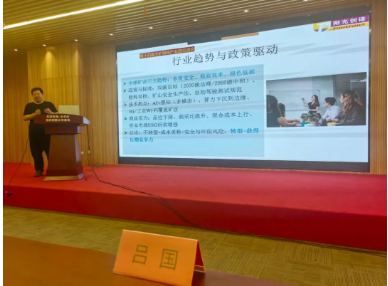
阳光创译吕国博士正在会议中发表演讲
IV. Transformation‑Related Challenges and Countermeasures
While affirming AI’s value, Dr. Lü Guo objectively analysed obstacles hindering intelligent‑mining transformation and put forward targeted solutions.
Resolving Data Silos
Drawing reference from the Code for Mining‑Data Governance (2024 Edition), enterprises are advised to adopt a two‑phase roadmap: within three months, formulate unified standards for data collection, storage and transmission to dismantle departmental data barriers; within six months, roll out enterprise‑wide big‑data platforms to achieve interoperability for geological, production, equipment‑related and environmental‑protection datasets.
Lowering Adoption Barriers for Small‑and‑Medium‑Sized Enterprises
Given capital constraints facing SMEs, priority should go to lightweight AI tools (for instance SaaS‑based AI predictive‑maintenance software with monthly service fees of merely RMB 10 000‑20 000) to reduce upfront investment. Enterprises may also partner with industry associations to apply for local‑government subsidies for intelligent‑renovation projects and ease cost pressures.
Closing Talent Gaps
University‑enterprise collaboration should deliver targeted talent development. For example, China University of Mining and Technology plans to pilot a “Mining‑AI‑Oriented Class” starting in 2025, cultivating compound‑skill professionals with both mining domain expertise and AI‑technology competence. In‑house “senior‑to‑junior” training programmes enable seasoned mining practitioners to acquire foundational AI know‑how and rapidly build local‑knowledge technical teams.
V. Future Outlook and Call‑to‑Action
Dr. Lü Guo outlined three projected trends for mining‑AI development: first, cross‑linking full‑industrial‑chain AI collaboration spanning exploration, production, logistics and sales to form intelligent closed‑loop workflows; second, deep‑rooted green‑mining practices through tighter integration between AI and carbon‑management / ecological‑restoration work to advance Dual‑Carbon objectives; third, globally‑unified standards as international mining enterprises jointly formulate AI‑application specifications and share technical norms.
He issued an industry‑wide call‑to‑action: enterprises ought to accelerate integration between digital‑infrastructure and AI technology and avoid the pitfall of “over‑investing in hardware while neglecting application layers”. The industry should strengthen international cooperation to build a mining‑AI ecosystem for shared case experience and technical outcomes. Governments are encouraged to further open public geological datasets and refine mining‑AI industry standards to deliver policy support for enterprise‑level transformation.
During the event, the investment‑promotion team from Binhai‑Zhongguancun Science Park presented the park’s basic profile, key industrial layout and special incentive policies, highlighting its strengths in gathering and servicing iron‑steel‑related industries. In the panel‑discussion segment, guests held in‑depth exchanges covering 2025 manganese‑ore‑market trends, ferromanganese‑slag‑sector development rules, mineral‑transport‑cost control and shipping‑route optimization, plus innovative AI applications within mineral industries. Participants proposed countermeasures and investment judgements addressing challenges and influencing factors affecting niche segments including manganese and chromium ores.
This exchange conference not only built an effective platform for resource‑matching and information‑sharing across the iron‑steel industrial chain, but also helped industry players identify development directions and seize opportunities amid the new‑normal landscape. Taking this conference participation as a new starting‑point, Suntrans will continue leveraging its strengths in language‑service delivery and industry‑resource integration, contributing further toward enabling Chinese iron‑and‑steel / mineral enterprises to enter global markets and advancing cross‑industrial‑chain collaborative development.
Biography: Dr. Lü Guo
Born in 1977 in Dunhuang, Gansu Province, Lü Guo is currently based in Beijing. He holds a postdoctoral fellowship from Peking University, serves as Chairman of Beijing Suntrans Language Translation Co., Ltd., and acts as CEO of Suntrans Consulting LLC (United States). His main professional spheres cover mining‑ and‑energy‑sector research, simultaneous interpretation, mining‑consulting and conference‑exhibition services.
Dr. Lü Guo earned his Doctor of Science degree in Mineralogy, Petrology and Ore‑Deposit Geology at China University of Geosciences (Beijing). During his PhD studies he completed joint‑training research at Miami University (USA). He later completed postdoctoral research in Geology at Peking University. He previously held part‑time roles at BHP Billiton (Australia, the world’s largest mining enterprise) and the Overseas Mineral‑Strategy Research Office under the China Geological Survey.
In 2008 he founded Beijing Suntrans Language Translation Co., Ltd. In 2011 he established New‑York‑based Suntrans Consulting LLC. His mining‑translation and consulting experience spans more than 40 countries.
Dr. Lü Guo has participated in compiling and translating series books on national mineral‑investment guides and multiple geological‑mining publications. For many years he has delivered translation services for high‑profile events including the China International Mining Conference, PDAC (Prospectors & Developers Association of Canada), China‑ASEAN Mining‑Cooperation Forum, Iron‑Ore Forum, plus training courses organised by the former Ministry of Land and Resources and the Ministry of Commerce of China.
He has travelled to more than 40 jurisdictions including Canada, the United States, Uganda, Rwanda, Ethiopia, Pakistan, Sri Lanka, Singapore, France, Costa Rica, Ecuador and Malaysia for geological‑mining‑related translation assignments and has taken part in numerous large‑scale international mining‑acquisition projects. As of 2023, he has organised and chaired nine editions of the China International Mining‑Development Summit Forum and five editions of the China International Translation Summit Forum.
Educational Background
Jan. 2012 – Jun. 2016 Postdoctoral Research Fellow, Department of Geology, School of Earth and Space Sciences, Peking University (Geology)
Aug. 2008 – Dec. 2009 Joint‑Training PhD Candidate, Miami University, USA (Geomicrobiology)
Jul. 2006 – Sep. 2008 Joint‑Training PhD Candidate, Institute of Microbiology, Chinese Academy of Sciences (Geomicrobiology)
2006 – 2011 Doctor of Science, Mineralogy, Petrology and Ore‑Deposit Geology, China University of Geosciences (Beijing)
2003 – 2006 Master of Science, Mineralogy, Petrology and Ore‑Deposit Geology, China University of Geosciences (Beijing)
2001 – 2004 Second Bachelor’s Degree, English Education, Lanzhou University
1996 – 2000 Bachelor of Science, Biological Science, Northwest Normal University
Work Experience
Feb. 2008 ‑ Present Chairman, Translator & Mining Consultant, Beijing Suntrans Language Translation Co., Ltd.
May 2011 ‑ Present CEO, Suntrans Consulting LLC, New York, USA
Dec. 2009 ‑ May 2010 Overseas Mineral‑Strategy Research Office, Development & Research Center, China Geological Survey
Apr. 2006 ‑ Aug. 2008 Porphyry‑Copper‑Deposit Exploration & Translation, BHP Billiton, Australia
Sep. 2000 ‑ Jun. 2003 Senior‑High‑School English Teacher, Dunhuang Middle School, Gansu Province
Social Appointments
2019 ‑ Present Deputy Secretary‑General, Tectonophysical‑Chemistry Committee, Chinese Geophysical Society
2018 ‑ Present Deputy Secretary‑General, Resource‑Industry‑Economy Committee, Geological Society of China
2020 ‑ Present Deputy Secretary‑General, Mining Committee, China‑Asia Economic‑Development Association
2016 ‑ Present Translation Trainer, Translators Association of China
Jun. 2016 ‑ Present Off‑campus Supervisor for MTI Students, Faculty of Arts and Law, China University of Mining and Technology‑Beijing
Dec. 2020 ‑ Present Off‑campus MTI Supervisor for Northwest Normal University, China University of Mining and Technology‑Beijing, Changchun University; English Lecturer, School of Foreign Languages, West Anhui University
About Suntrans
Beijing Suntrans Language Translation Co., Ltd. (Suntrans) is a translation‑and‑consulting‑service provider specialising in mining‑ and‑energy‑sector industries. Founded in Beijing in February 2008, Suntrans maintains a subsidiary in New York (USA) plus representative offices in Uganda and Pakistan.
Over 16 years under Chairman Dr. Lü Guo’s leadership, Suntrans has grown steadily. Its core positioning has evolved from “building China’s leading geological‑mining‑translation brand” into “a major international‑mining‑and‑energy‑service platform for China”. Its business scope covers mining‑and‑energy translation, conference‑exhibition services, mining consulting, mining‑industry headhunting, the “Belt and Road” Mining‑and‑Energy Chamber of Commerce, plus mining‑and‑energy‑sector media services.
Suntrans ranks among globally‑leading multi‑language service providers for specialised industries. It holds membership within the Translators Association of China, the China Language‑Service‑Industry Technology‑Innovation Alliance, and the Council of the Global Geological‑Information‑Sharing Committee under the China Mining Federation. Suntrans delivers holistic language‑solution packages supporting internationalisation and localisation for Chinese geological, mining and petroleum‑sector enterprises, alongside mining‑and‑energy consulting services, advancing the global‑outreach journey of China’s mining companies.
← Back