3. Capability reconstruction: Competency framework for mining comprehensive talents
So, what abilities does a qualified mining comprehensive talent need to possess? Combining my many years of practice and talent training experience, I summarized it as a four-layer structure: the base is language ability, the pillar is industry knowledge, and the lever isAITools, the high end is composite consulting. The four are progressive and indispensable. I will expand it layer by layer below.
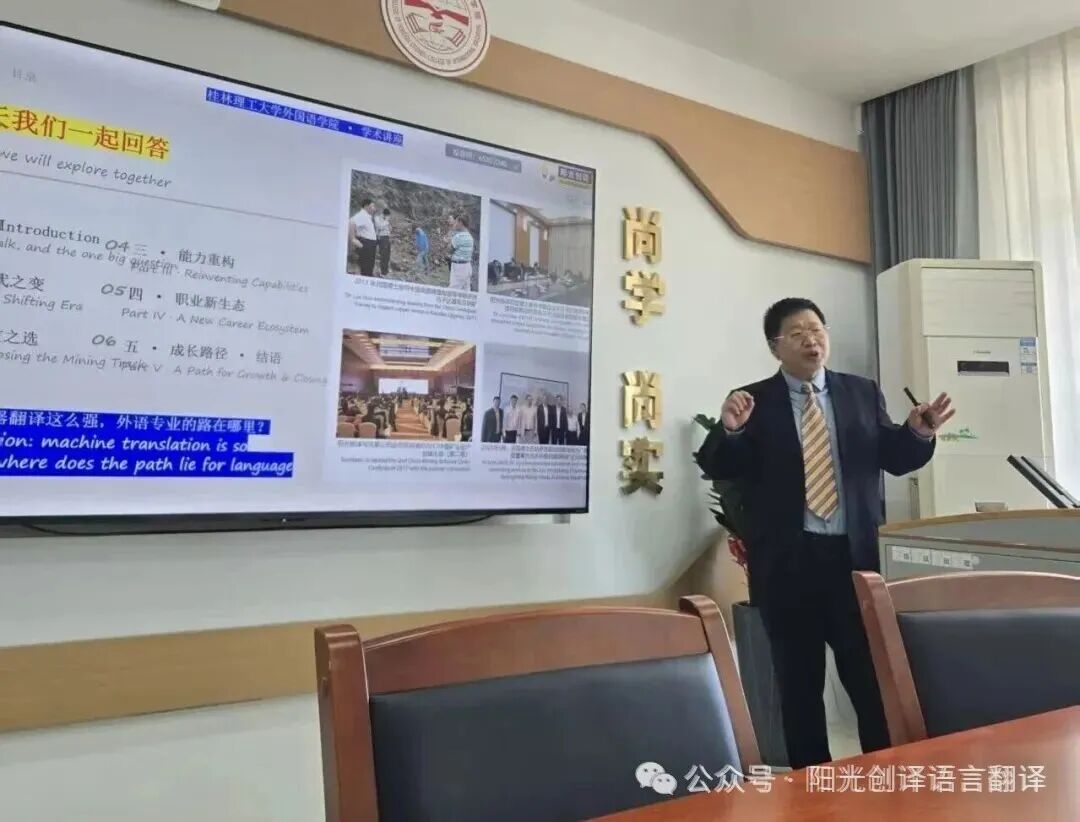
Dr. Lu Guo from Suntrans is giving an academic lecture
(1) Base: Solid language skills
No matter how technology changes, language skills will always be the foundation of success and the foundation for all upgrades.AINo matter how strong it is, people who understand the language are still needed to judge the quality of the translation, grasp the appropriateness of expression, and manage the terminology system. With solid language skills, you areAIRight in front of me"commander";If your language skills are weak, you can only beAIof"microphone".
The meaning of language skills includes several levels. First, a solid foundation in bilingualism or even multilingualism requires both accurate written expression and fluent oral communication. Second, the basic skills of translation, including the accuracy of written translation, the response of interpreters, and the rhythm of simultaneous interpretation. These basic skills require systematic training and do not happen overnight. Third, terminology management capabilities enable the establishment and maintenance of professional terminology databases for specific projects to ensure consistent translation and industry recognition. Fourth, cross-cultural communication skills, the ability to understand and reconcile expression habits and business etiquette in different cultural backgrounds.
I would like to give a reminder to my classmates: Never do it because ofAIappear to despise basic skills. On the contrary,AIThe more popular it is, the more valuable the basic skills of professional translators are.——Because what the market ultimately needs is"Can understandAIIs that right? It can be improved.AIWhat's wrong"people. That's the basic skill"referee"and"helmsman"ability. For example,AIIt's a car that gets better and better, and the basic skill is your ability to hold the steering wheel and know where to go. No matter how good the car is, if you can't hold the steering wheel firmly, you won't be able to reach your destination.
I particularly want to emphasize"Terminology management"This one. Many people think that memorizing terminology is hard work, but it is precisely this work that distinguishes professional translators from general translators. A mining project often involves thousands of professional terms. Whoever can sort out these terms clearly and unify them can ensure the quality of the project and win the long-term trust of customers. Terminology ability is an asset that can be deposited, reused, and becomes more valuable as it accumulates.
Of course, language skills are not just"Can translate", also includes continuous language learning and self-improvement. Language is alive, industry terminology is changing, and expression methods are changing. You must constantly update your language ability library. I often say that language skills are not something that can be acquired once and for all. It needs to be sharpened like a knife, constantly sharpened.
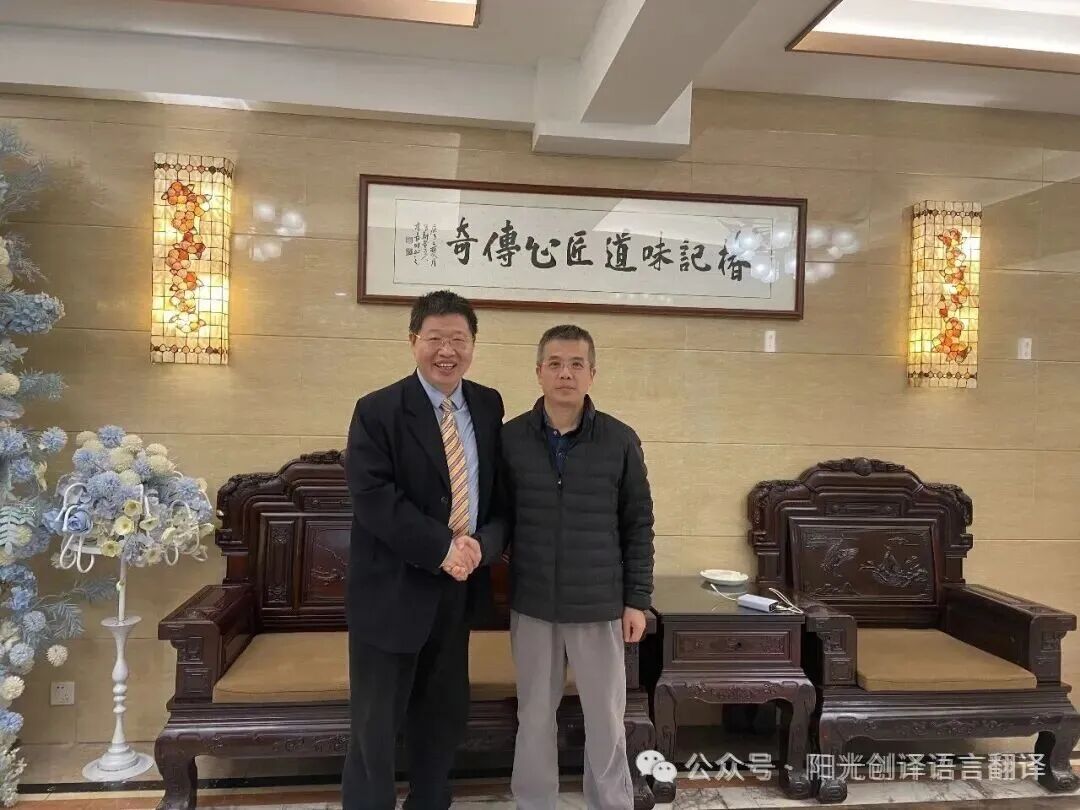
Dr. Lu Guo from Suntrans took a group photo with Dean Quan Kelin of the School of Foreign Languages of Guilin University of Technology
(2) Pillar: Cognition of Mining Industry
The second level is to make the language truly"landing"key——Mining industry awareness. Without industry knowledge, your translation is just"Literal transfer";With industry knowledge, your translation can become"Professional expression". This is what determines what you are"General translator"still"mining translator"of watershed.
Mining industry awareness mainly includes several modules. First, geological and exploration knowledge: understand rocks, minerals, mineral deposit types, and prospecting methods, be able to understand geological reports and exploration results, and know"Skarn type deposits""porphyry copper deposit"What are these concepts saying. Second, mining and mineral processing knowledge: understand open-pit and underground mining, crushing and grinding, flotation and gravity separation, and smelting processes, and be able to understand the mining site"jargon". Third, mining economics and investment knowledge: understand mineral rights, grades, reserves, mining rights prices, and royalties, and be able to understand the basic logic of mining investment and project evaluation, and understand"Pre-feasibility study""Feasibility study""cutoff grade""break-even point"the weight of these concepts. Fourth, international mining norms and regulations: familiarityJORCspecification,CIMstandard,NI 43- 101Report and other internationally accepted disclosure standards for resources and reserves, and understand the mining laws and investment policies of the target country. Fifth, mining business and compliance: including mining contracts,ESGrequirements, environmental protection, community relations and other increasingly important issues.
Someone may ask: As a foreign language major, is it too difficult for me to learn these geological and mining knowledge? My answer is: You don’t need to be a geologist, but you need to be one"Understand what geologists say"of mining generalists. Once you learn the terminology, streamline the process, and understand the logic, you can build a bridge between professional translators and mining talents.——And this is the compounding ability that is most scarce in the market and is most willing to pay a high price.
Let me be more specific and talk about"Mining Generalist"How much do you need to understand? You don’t have to know how to calculate the slope stability of a mine, but you do need to know"slope""steps""peel ratio"What does it mean? You don’t have to be able to design the mineral processing process, but you have to understand"grade""recovery rate""Concentrate grade"What is the relationship between them? You don’t have to be able to make a reserve report, but you need to knowJORCStandardizes the division of resources into"Actual measurement, indication, inference"Several levels, what each means. With this level of understanding, customers will dare to use what you translate, and people in the industry will be willing to listen to what you say.
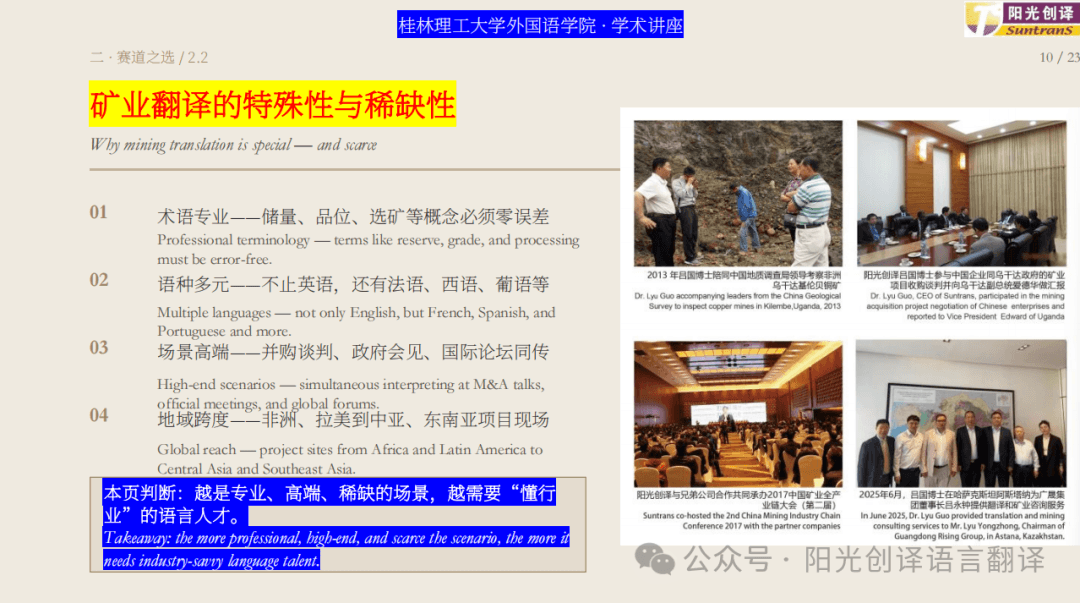
Part of the content of "Capacity Reconstruction and New Professional Ecology of Mining Translator Talents in the AI Era"
Let me put it more bluntly: a translator who only understands foreign languages and a translator who understands both foreign languages and mining will create completely different values for customers and quote completely different prices. The former may be"word count"Pricing, the latter is often based on"project""by value"valuation. Industry cognition is to take you from"Working hard based on the number of words"become"Selling wisdom by value"of that key.
Some students may be worried: As a student in the School of Foreign Languages, where should I learn mining knowledge? In fact, there are many more channels than imagined. The first is the school’s science and engineering courses and library resources. If possible, attend courses in geology, mining, and metallurgy. Many schools also offer mining English and scientific English. The second is industry books and public information. There are many introductory readings, terminology manuals, and normative texts on mining at home and abroad. Self-study is completely feasible; third, go to industry conferences and forums to listen, see and communicate more. The most cutting-edge topics and most practical terminology in the industry are often found in these occasions; fourth, industry organizations like ours are also willing to provide opportunities for learning and practice for young people who are interested in this. The key is"Deliberate", method always comes second. As long as you really want to learn, mining, a rich mine of knowledge, has doors open everywhere.
In order to give students an intuitive experience, I have listed a set of high-frequency and most error-prone technical terms in mining translation for your reference. It can also be regarded as your first lesson into the world of mining language:
surface 3Examples of high-frequency terms in mining translation
English terms
Chinese translation
Industry meaning description
ore
ore
Mining refers to natural mineral aggregates that can be exploited economically
resource
Amount of resources
The total amount of mineral resources estimated according to international standards, and"reserves"phase distinction
reserve
reserves
The amount of ore that can be mined economically after technical and economic demonstration
cut-off grade
cutoff grade
The lowest grade boundary that divides minerals and non-minerals
prefeasibility study
pre-feasibility study
Technical and economic research stage in the early stage of mine development
feasibility study
feasibility study
Detailed technical and economic studies that inform investment decisions
concentrate
Concentrate
Products after mineral processing and enrichment, such as copper concentrate and iron ore concentrate
tailings
Tailings
Waste residue and slime discharged after mineral processing
stripping ratio
peel ratio
The ratio of waste rock stripped to the amount of ore extracted in open pit mining
royalty
Royalty
Royalties paid to resource owners in mining developments
You see, these terms are superficially"word", but behind it is a set of technical and economic logic of mining. Only by truly understanding these logics can your translation start from"Matching words"upgraded to"speakable". This is why I say that industry knowledge is the pillar of language implementation.
(3) Leverage:AITool ability
The third layer isAITool capabilities. existAIIn this era, making good use of tools is not"be lazy", but a part of professionalism, a lever that doubles your efficiency and devotes your energy to higher-value work. With good use of tools, one translator can handle the basic workload of a team in the past, and the time saved can be invested in high-end links that require judgment.
Specifically,AITool capabilities include at least several aspects. The first is pre- and post-translation editing: make good use of machine translation and large models as the first draft, and then conduct high-quality manual review and polishing to form"Human-machine collaboration"workflow. This is the most practical and common way of working today. The second is term database and memory database construction: use tools to build and manage project-level term databases to improve the consistency and efficiency of translation so that each project can"Do it faster and faster". The third is information retrieval and information integration: usingAIRetrieve overseas mining information, policies, and market dynamics, and conduct preliminary screening, classification, and summary to provide input for decision-making. The fourth is multilingual information processing: with the help ofAIProcessing multilingual materials, and then having professionals check key conclusions, greatly expands a translator's language service radius. The fifth is prompt word ability: able to giveAIGiving clear, professional, and executable instructions is the basic skill of translators and consultants in the new era, and it is something that many colleagues have not yet realized."new moat".
I especially want to talk about it"prompt word ability". Many people think that the prompt word is"Help me translate this paragraph into English", in fact, it is much more than that. Professional prompts should clearly state industry norms, terminology restrictions, target readers, stylistic requirements, and risk warnings, so thatAIWork within a professional framework. For example, giveAIGive the order to translate a mining contract and I will ask for it"Translate according to the commonly used expressions in mining and contracts in mainland China, retain the clause number, and add explanations for expressions that may cause ambiguity or risk.". soAIThe output is no longer a blunt literal translation, but a usable professional first draft. This ability directly determines a person's ability to useAIthe upper limit of efficiency.
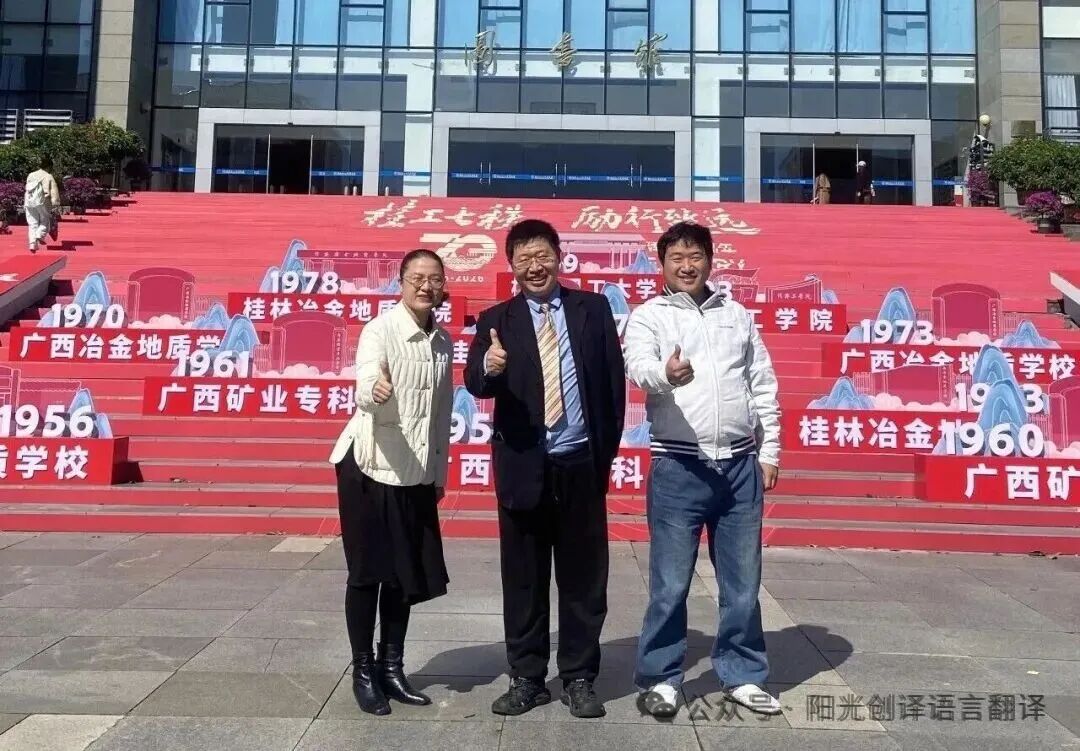
Dr. Lu Guo from Suntrans takes a group photo with teachers from the School of Foreign Languages (School of International Education) of Guilin University of Technology
I'll put it again"AITool ability"Let’s be clear about the connotation: it is by no means just"How to order a certain software"This kind of operational level thing, but a whole set of"Human-machine collaboration"methodology. It includes: knowing what tasks are appropriate to assignAI, What tasks must be checked by people; know how to use themAIQuickly build a first draft, and how to systematically review and improve quality; know how to useAIExpand information retrieval and language coverage while always keeping an eye onAIOutput remains prudent——Do not blindly believe, must verify. This methodology needs to be polished repeatedly in real projects. It can be said that: inAIIn this era, people who can use tools are"work with machines", and those who can control tools are"Use the machine to magnify yourself"——The latter are the talents that are truly scarce in the market.
I would also like to give students a specific action suggestion: starting from today, start usingAIdo something real— —For example, useAIWe will assist you in translating a mining industry article, and then you will complete the review and terminology checking yourself, and record the problems discovered in the process. If you persist for a month or two, you will truly feel the power and boundaries of human-machine collaboration, and you will more quickly find the direction you should delve into.
What needs to be emphasized is thatAIAn amplifier not a replacement. What it amplifies is your professional judgment: the deeper your industry knowledge and the more solid your language skills,AIThe greater the value generated here for you. On the contrary, a person without professional foundation can only get a lot of results no matter how many tools he uses."Looks right, actually wrong"result. so,AIThis is not a reason to make you lie down, but a pusher that forces you to be more professional and diligent. When our company recruits, the most important thing now is no longer"Will it be used?AI", but"useAICan you judge what is right and wrong, and can you translate professional requirements intoAIComprehensible instructions".
(4) High-end: business intelligence, public opinion analysis and project consulting
The fourth level is the high-end composite ability that brings together all the previous abilities. It is also the highest expression of the value of mining language talents. This part of the ability allows"Translation talents"Really transition to"Consulting talents". Based on practice, I refined it into four directions.
The first is mining business intelligence research. Before a company goes overseas, it needs to systematically understand the resource endowment, mining policy, investment environment, competitors, and partner backgrounds of the target country. This requires people who understand both language and mining to retrieve, organize, and analyze massive amounts of multilingual information to form intelligence reports that can be used for decision-making. this work,AICan be greatly speeded up, but"Can understand, judge accurately, and make suggestions"The core judgment depends on people. My experience working at BHP Billiton and the Geological Survey tells me that a piece of high-quality intelligence is worth far more than an ordinary translation.
The second is the research and judgment of mining public opinion. Mining projects often face pressure from overseas public opinion, and community conflicts, environmental disputes, and policy changes may trigger public opinion. Language talents can monitor multilingual media and social media, capture risk signals in a timely manner, assess the impact of events, and assist companies in formulating response strategies. This is mining"Go to sea"Capabilities that are increasingly needed are also a segment that has grown rapidly in recent years. For example, for an overseas mining project, the discussions on social media between local environmental organizations and community residents may be a key variable in whether the project can proceed smoothly. People who can understand these discussions and judge their impact are of great value to the company.
The third is multinational mining project consulting. From project feasibility studies to merger and acquisition due diligence, from mineral rights evaluation to contract negotiations, consultants who understand both international mining rules and the language and culture of the target country are needed to provide customers with everything from translation to consulting."one stop shop"Serve. When I was helping Chinese companies with their overseas mining acquisitions, my deepest realization was: What customers really need is not a person who just knows how to do it."Turn over the contract"rather than a partner who can accompany him through the entire acquisition process, help him avoid risks, and facilitate transactions.
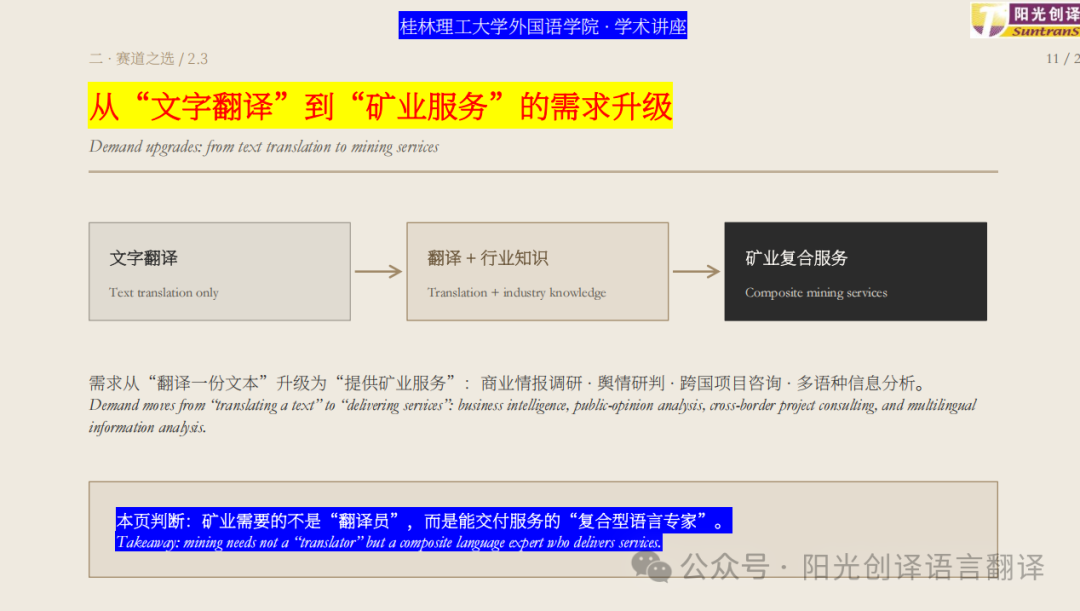
Part of the content of "Capacity Reconstruction and New Professional Ecology of Mining Translator Talents in the AI Era"
The fourth is multilingual mining information analysis. Gather information from different countries and languages into analytical conclusions from a unified perspective to help customers see"overall situation". This cross-language and cross-cultural comprehensive analysis ability is difficult to replace by people with a single language and a single major. This is also one of the core values that our New York Sunshine Transcreation Consulting Company has long provided to our clients.
I string these four things together and tell a complete business scenario so that students can understand it more intuitively."High-end composite capabilities"What does it look like? When a mining company is preparing to acquire a project overseas, the first material it needs is often an investment environment intelligence report on the country and the mineral.——This is intelligence research; then, it needs to judge whether there are public opinion or policy risks in this project based on the voices of local media and social platforms.——This is public opinion research and judgment; from then on, from mining rights due diligence to contract negotiation, the entire process requires professional support that understands both international rules and the language and culture of the target country.——This is project consultation; finally, information from different channels and different languages is summarized into a unified decision-making reference——This is information analysis. The four things put together form a complete closed loop of work for a mining consultant. It is also a blue ocean that language talents can cultivate in the long term and become more valuable the more they do it.
These four high-end capabilities require high comprehensive quality of talents, but they are not out of reach. Their common basis is the base, pillars and levers we talked about earlier. Language skills determine whether you can understand the information, and industry knowledge determines whether you can understand the door.AITools determine whether you can process information efficiently. With the three in place, high-end composite capabilities will naturally come naturally. So, don't be"high-end"The word "frighten" means taking every step firmly, and the high end is at your feet.
(5) Overview of competency framework
In order to let everyone understand this four-level competency framework more intuitively, I have organized it into a table, which will also make it easier for students to compare and plan their own learning in the future:
surface 1Mining Comprehensive Talent Competency Framework
Hierarchy
Capability module
core content
career value proposition
Base
pillar
language ability
Industry awareness
Basic bilingual/multilingual skills, simultaneous translation and interpretation, terminology management, cross-cultural communication
Geological exploration, mining and mineral processing, mining economics and investment, international mining norms and regulations, mining business compliance
The foundation of translation services and the prerequisite for all upgrades
The key to moving translation from "literal" to "professional"
lever
AI tools
Pre- and post-translation editing, term database construction, information retrieval, multilingual processing, prompt word ability
Efficiency multiplier, amplifying professional judgment
high-end
Compound consultation
Business intelligence research, public opinion analysis, transnational project consulting, etc.
High value-added core values, starting from
Language information analysis
Translator to consultant
These four levels are not four parallel options, but a progressive growth ladder. Most people from"Base"Start, fuck"lever"speed up, borrow"pillar"Stand firm and finally move towards"high-end". I hope students will regard it as a"Career Roadmap"to use——You can stick it in front of your desk and check it every once in a while to see which floor you have reached.
I would also like to add another point of view: This four-tier competency framework is not only suitable for students who want to do mining translation and consulting, but also for anyone who wants to work in the mining industry."Language plus industry"Foreign language students who develop in this direction. Mining is just a representative field that I am deeply involved in, and the logic behind it is the same.——Language foundation, industry value-added, technology acceleration, and high-end services. If you understand this framework thoroughly, whether you enter mining, energy, law, finance or any other vertical industry in the future, you will avoid many detours. The frame is"road", the industry is"technique", first understand the Tao, then practice the technique, and the path of growth will be much clearer.
4. New career ecology: diverse tracks for mining translation
(1) Evolution of traditional positions
Many people think that mining translation is"Do translation and simultaneous interpretation", in fact, the professional ecology has already been diversified. Traditional jobs have not disappeared, but continue to evolve and upgrade. This evolution is precisely a reflection of the vitality of the industry.
Let’s look at the translation first. Translation positions are opening to"Professional proofreader"Evolution: Low-end drafts are handed over to machines, while high-end, professional, legal, and technical documents still need to be checked by senior translators. Translators used to be"from zero to one"producer, now more and more the role of translator becomes that of"Responsible for machine output"The quality manager has higher requirements.
Let’s look at interpretation again. Interpreter positions are opening to"Meetings and Negotiations Expert"Evolution: Ordinary communication can use simultaneous interpretation equipment,AIReal-time subtitles, but government meetings, business negotiations, and technical due diligence are still inseparable from the on-the-spot control of professional translators. This kind of"high value interpretation"Not only has it not been replaced, it has become even more popular because of its scarcity.
There are also terminology and localization posts. With the informatization and digitization of the mining industry, terminology database construction, software localization, and multilingual content management have become new subdivision directions. Mining companies' official websites, software, management systems, and bidding documents all need to be multilingual. These jobs increasingly require language talents who understand mining.
At the same time, a number of brand new positions are emerging, which deeply combine language skills with mining services, forming what I call"New career ecology".
Here I would like to clarify a common misunderstanding: Many people hear thatAIIf we want to replace translation, we are worried that the profession of translation will disappear. In fact, on the contrary, careers will not disappear."connotation"and"threshold"It will keep moving up. The general translation work that an ordinary translator could handle in the past may not be needed now; but the professional translation and consultation that used to require senior translators are still needed now, and because the threshold has moved up and there are fewer competitors, the value is even higher. For practitioners who are willing to continuously improve themselves and go deeper into their profession, this is not bad news, but an opportunity. The only ones who will be truly eliminated will be those who stay where they are and are unwilling to upgrade.
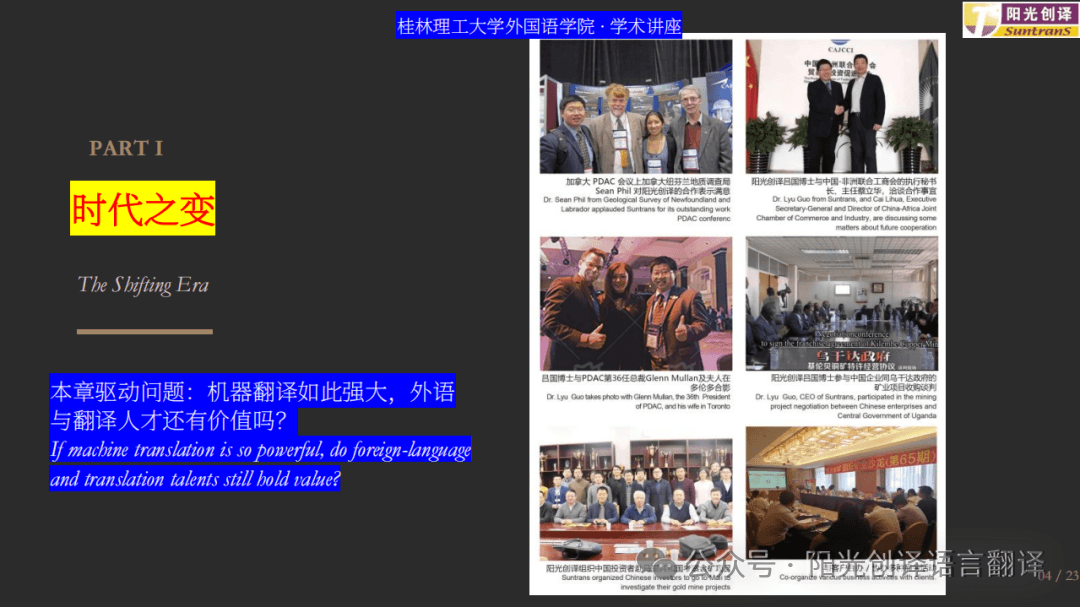
Part of the content of "Capacity Reconstruction and New Professional Ecology of Mining Translator Talents in the AI Era"
(2) Emerging career directions
Based on industry practice, I have sorted out the most promising directions at present and give you a picture first."map":
surface 2Mining Translation Diversified Career Track
career direction
Typical positions
Core competency requirements
Mainly for institutions
Internationalization of mining companies
Overseas project translation, international business, mining intelligence specialist
language+mining+Business
Mining companies, multinational enterprises, overseas enterprises
Professional translation and consulting
Mining simultaneous interpreter, mining consultant, due diligence translator
Simultaneous interpretation+Industry awareness
Translation companies, consulting agencies (such as
Suntrans)
Government and international collaborative research institutions and media
Foreign aid training translator, international cooperation officer, regional affairs specialist
Mining research assistant, multilingual editor, overseas market analysis
Multilingual+public affairs
language+information analysis
Government departments, international organizations, industry associations
Research institutes, financial media, data institutions
Freelance jobs and platforms
Mining translation, conference interpretation, information outsourcing
language+AItool+Self-operating ability
Personal freelance and crowdsourcing platform
Let me expand on several directions. International positions in mining companies are currently attracting the most talents. As mining companies go overseas on a large scale, the demand for overseas project translators, international business, and mining intelligence specialists is growing rapidly. The advantages of this type of position are stability, in-depth industry experience, and clear promotion paths. If done well, you can go from translator to international business department or even regional director.
Professional translation and consulting are our main battlefield and the best expression of"compound value"place. There are simultaneous interpreters for high-end meetings, as well as due diligence translators for in-depth projects, as well as mining consultants who provide customers with overall solutions. The growth path is to first do solid translation, and then gradually extend to intelligence, consulting, and negotiation support.
The direction of government and international cooperation is more suitable for students with a passion for public affairs and outstanding multilingual abilities. Positions such as foreign aid training, international cooperation officer, and regional affairs specialist not only serve national strategies, but also allow you to see the world from a high perspective. Many students in the foreign aid training courses we undertook from the Ministry of Commerce later became bridges for mining cooperation between various countries.
It is particularly worth mentioning that"Mining Consultant"This category. As more and more Chinese companies and investment institutions move towards overseas mining, their interest in"He can not only translate, but also understands mining and can conduct research and judgment."The demand for comprehensive consultants is growing day by day. This kind of position has high salary and fast growth, which is also the direction that our company has focused on training and delivering in recent years. There are many young people in our team who started out as foreign language majors and eventually grew into the backbone of mining consulting. You can completely copy the path they have taken.
I also want to remind everyone that you don’t have to choose just one career track. Many outstanding talents often"Make achievements in one direction first, and then expand to adjacent directions.". For example, you can work as a translator for overseas projects in a mining company, and after accumulating industry resources, you can transition to mining intelligence or consulting; you can also work as a simultaneous interpreter in a translation company, gradually extending to negotiation support and project management. If you think of the track as a network that can be continuously extended, rather than a line that can only be reached to the end, your career space will be much larger.
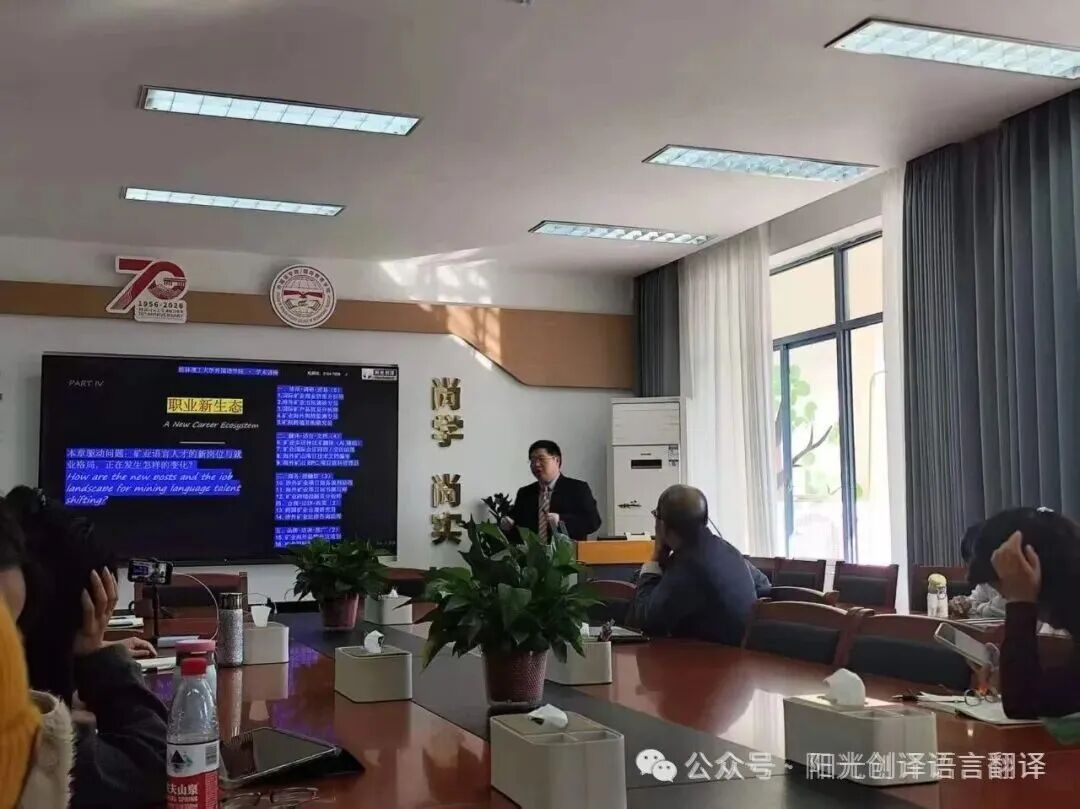
Dr. Lu Guo from Suntrans is giving an academic lecture
(3) Employment pattern and market demand
From a macro perspective, the market demand for mining language talents is showing several obvious trends.
First, demand is concentrated towards high-end products. General translation is being replaced by machines, but the demand for high-end professional translation and consulting is rising instead of falling. The more complex and important the project, the more truly professional mining translators are needed. Second, demand is concentrated towards compounding. simple"speak foreign languages"Or simply"Understand mining"Neither is enough. What the market really lacks is"Foreign Languages and Mining"Comprehensive talents. Third, demand is concentrated towards service-oriented services. Customers buy from"Translation products"turn to buy"Mining services", whoever can provide an overall solution from translation to consultation will take the initiative. Fourth, demand extends to multiple languages and regions. As the international territory of the mining industry expands, combinations of Spanish, Portuguese, French, Russian, Arabic and other languages plus mining are becoming more and more popular, and the advantages of students with mixed language backgrounds are even more obvious.
Let me give you another angle of judgment. You can search on the recruitment platform"Mining Translation""Overseas mining""Mining Business""Mining Intelligence"Use these keywords to see what kind of person the employer is looking for and what kind of requirements it has. You will find that what is really popular is often not"pure translation", but"Translation plus mining""Translation plus business"Comprehensive talents. This confirms the judgment I made earlier: Mining language talents are not"excess", but"structural shortage"--What is in short supply is the kind of compound talents who understand both the language and the industry.
I would also like to remind students to pay special attention to"Regionalization"opportunity. Mining cooperation in different regions often corresponds to different languages and different industry needs. As China's mining cooperation with Central Asia, Latin America, Africa and other regions continues to deepen, the gap in compound talents with corresponding languages and mining will exist for a long time. If you master a second foreign language in addition to English——Whether it's Spanish, Portuguese, French, Russian or Arabic——And if you are willing to delve into the mining industry, your scarcity and bargaining power will be multiplied. This kind of"Minor languages plus industries"The differentiated advantages are not possessed by many general-purpose foreign language talents, and it is also a direction worthy of serious consideration by students.
For foreign language majors, this is both a clear signal and a source of continued confidence. As long as you are willing to delve into vertical industries, the opportunities are there.
Finally, I would like to give students an overall judgment framework. To judge whether a career track is worth investing in, you need to look at three dimensions: First, the certainty of demand, whether this industry will need a large number of such people in the next ten years; second, the scarcity of supply, whether there are enough talents in the market; third, the accumulation of personal abilities, in this track, whether your experience, connections and skills will increase in value over time. Mining translation and consulting is a track that excels in all three dimensions.——The demand exists for a long time and is constantly escalating. Comprehensive talents are seriously scarce. Personal accumulation can grow with compound interest. Therefore, I confidently tell my classmates: This is a path worthy of serious investment.
Character introduction
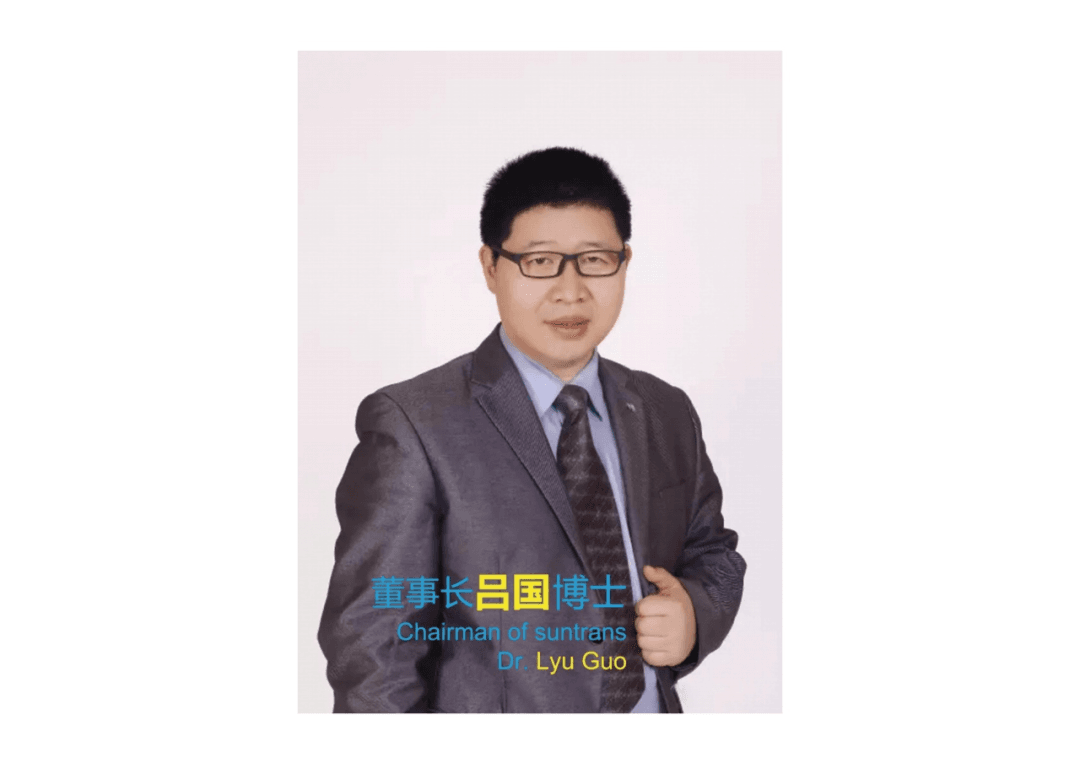
Beijing Sunshine Transcreation Dr. Lu Guo
1. Chairman of Beijing Suntrans Company
2. Chief Executive Officer (CEO) of Suntrans Consulting LLC in the United States
3. Senior mining simultaneous interpretation and negotiation expert, has provided services to presidential and ministerial level dignitaries in many countries
4. International mining consulting expert, participating in mining investment and M&A projects covering more than 30 countries around the world
5. Off-campus master's degree supervisor at China University of Mining and Technology (Beijing) Master of Translation and Translation (MTI)
6. Worked for BHP Billiton, the world’s largest international mining company
7. Worked in the Overseas Mineral Strategy Research Office of China Geological Survey
8. Ph.D. jointly trained by China University of Geosciences (Beijing), University of Miami, and Chinese Academy of Sciences
9. Postdoctoral fellow in geology at Peking University
10. Organize and host the series of "China International Mining Development Summit Forum" and "China International Translation Summit Forum"
1.Chairman of Beijing Suntrans Language Translation Co., Ltd.
2.CEO of Suntrans Consulting LLC (USA)
3.Senior simultaneous interpreter and negotiation expert in the mining industry, having provided services for presidential and ministerial-level dignitaries from multiple countries
4.International mining consulting expert, with mining investment and M&A projects covering more than 30 countries worldwide
5.Off-campus Master’s Supervisor for Master of Translation and Interpreting (MTI) at China University of Mining and Technology (Beijing)
6.Former employee of BHP Billiton—the world's largest international mining company
7.Former staff member at the Overseas Mineral Strategy Research Office of the China Geological Survey (CGS)
8.PhD jointly cultivated by China University of Geosciences (Beijing), University of Miami (USA), and the Chinese Academy of Sciences
9.Postdoctoral Fellow in Geology at Peking University
10.Organizer and host of a series of “China International Mining Development Summits” and “China International Translation Summits”
Introduction to Sunshine Transcreation
Beijing Suntrans Translation Co., Ltd. (Suntrans) is a translation and consulting service provider focusing on the mining and energy fields. Sunshine Transcreation was established in Beijing in February 2008. It has a branch in New York, USA, and offices in Uganda and Pakistan. Over the past 18 years, under the leadership of Chairman Dr. Lu Guo, Suntrans has developed rapidly and steadily. Its core positioning has been gradually extended from "building a leading brand of geological and mining translation in China" to "China's international mining and energy service platform", covering international service sectors such as translation, exhibitions, consulting, headhunting, "Belt and Road" Mining and Energy Chamber of Commerce, and mining and energy media.
Sunshine Transcreation is a leading international multi-lingual service provider in professional fields. It is a member of the Translators Association of China, a member of the China Language Service Industry Technology Innovation Alliance and a board member of the Global Geological Information Sharing Committee of the China Mining Federation. Suntrans provides overall language solutions for the internationalization and localization of Chinese companies in the geological, mining and petroleum fields, provides mining and energy consulting services, and promotes the internationalization process of Chinese mining companies.
← Back