February 8, 2026, President Li Qiang of an industry‑leading association held in‑depth panel discussions with Dr. Lv Guo of Suntrans. Both sides conducted comprehensive deliberations on core themes including business layout across the full mining‑service industrial chain, practical experience from benchmark projects, current industry status and market trends, as well as future development directions and implementation recommendations for the sector. Bringing together front‑line practical expertise and top‑level industry insights, this exchange clarified ideas and orientations for high‑quality development within mining services and laid a solid foundation for future resource integration and cooperation between the two parties in the mining domain.
During the discussion, Dr. Lv Guo elaborated on the core layout and practical deliverables of his team, which has long‑standing expertise in industrial‑chain services for mining and selected petroleum segments. According to his introduction, the team delivers services covering the full lifecycle of mining operations. Its business portfolio encompasses mine asset transactions, mineral resource valuation, mining project financing, high‑end mining talent headhunting, mining exhibition hosting, machinery‑equipment trading and marketing consulting. Meanwhile, it provides professional information consulting, business matchmaking and supporting translation services for mining‑right transfers and mineral commodity trade. It also conducts mining‑related research and overseas mine‑resource matchmaking for government agencies and central SOEs, forming a diversified, full‑stack mining‑service system.
In terms of charging mechanisms, the team has developed standardized industry‑aligned frameworks tailored to different business lines. For mining headhunting services, fees are charged at 20 % of the recruited candidate’s annual salary, enabling precise talent sourcing for senior roles such as concentrator plant managers and geologists for leading enterprises including Zijin Mining and Shandong Gold. When accompanying enterprises on overseas mining‑project negotiations, a base service fee of RMB 10,000 per day applies. Upon successful project closure, fixed commissions are levied per ton of ore. For instance, the annual commission revenue for the potential Anshan Iron and Steel iron‑ore import project could range from tens of millions to hundreds of millions of RMB upon successful execution. Custom mining‑industry trend‑analysis reports are priced between RMB 60,000 and 100,000 per document. For research and matchmaking services rendered to government bodies and central SOEs, the team adopts a “service fee plus percentage‑based commission” model. Addressing long‑standing industry pain points such as commission arrears and counterparty contractual breaches in mining cooperation, both sides reached consensus that formal, standardized contracts constitute a critical measure for mitigating operational risks.
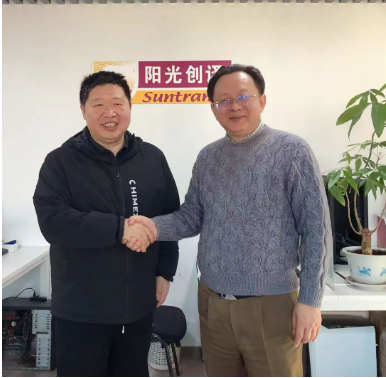
阳光创译吕国博士与李强会长进行交流探讨
Dr. Lv Guo also shared multiple benchmark delivery cases completed by his team in domestic and international mining services, demonstrating robust project execution and resource‑matchmaking capabilities. Notable achievements include facilitating Xima Tibet’s acquisition of Uganda’s largest copper‑cobalt mine; as project manager, he organized on‑site surveys involving 14 central SOEs and private enterprises, and the project received media coverage from Uganda National Television. He oversaw exploration work for the Jiriot Iron Ore Deposit near Lahore, Pakistan, for MCC and Wuhan Iron and Steel under Wuhan Mining. Cooperation commenced in 2014‑2015 and has continued to this day, during which briefings were repeatedly delivered to relevant Pakistani senior government officials. He negotiated with a Sri‑Lankan army general on local alluvial‑gold‑mine projects and organized field inspections. His team also delivered mineral‑exploration plus translation services for global mining giant BHP, participating in silver‑copper deposit exploration across Xinjiang, Inner Mongolia and Gansu. Further track‑record highlights include connecting China Mineral Resources Group with African exploration projects, generating nearly RMB 100 million in benefits for the enterprise; facilitating Australian iron‑ore resource access for Anshan Iron and Steel; and providing mining‑focused research and matchmaking support for the China‑Central Asia States Conference. Serving private firms, central SOEs and governmental authorities alike, the team acts as a vital bridge for overseas mineral‑resource collaboration.
Drawing on real‑world market conditions, both sides engaged in in‑depth research and judgment on the current state and macro‑market trends of the mining sector. They hold the view that China will continue advancing its global mineral‑resource deployment over the next 30‑50 years, with overseas mine acquisitions representing a key development trajectory for the mining industry. As a core link within the industrial chain, mining services are presented with significant development opportunities. Meanwhile, both parties pointed out multiple challenges confronting the industry. Metal futures markets have recently experienced drastic volatility, with sharp declines in gold, silver and other commodities. Stainless‑steel futures have registered single‑day price swings exceeding RMB 500. The root cause lies in excessive money supply that fails to flow into the real economy, leaving large volumes of idle capital to fuel speculative trading in futures, spot and equity markets. Driven by flattened internet‑era business models and shifts in corporate working patterns, the office‑building leasing market has cooled down. Mining and related industries are increasingly adopting flexible working arrangements, with “output‑centered performance” becoming a major corporate‑management principle. In addition, discussions covered changes in R&D vitality following mergers among certain state‑owned enterprises and institutional bottlenecks constraining real‑economy development, offering practical reference for future industry breakthroughs.
Based on industry realities and operational requirements, the two sides put forward a set of actionable recommendations for the future advancement of mining services, revolving around three priorities: elevating professional industry influence, strengthening brand promotion, and optimizing corporate operational layouts. To expand industry clout, they proposed joining expert pools of the China Nonferrous Equipment Association and the China Iron and Steel Association, securing adjunct‑researcher affiliations at influential non‑ferrous‑metal and iron‑ore research institutes to gain access to core industry circles and boost discourse power via professional platforms and credentials. For brand outreach, they advocated continuous publication of trend‑analysis articles in industry newspapers and journals, enhanced visibility through targeted advertising and industry news coverage, and expanded exposure at mining summits and round‑table forums. The goal is to transform “domain‑specific experts” into “widely‑recognized industry figures”, while implementing tiered communication guided by the principle: “show professionalism to general audiences while making promotional intent transparent to insiders”. Regarding operational restructuring, plans include registering a mining‑technology company and a mining‑consulting company in Zhengzhou to realize independent operation of the two business segments. Business boundaries will also be expanded to undertake mining‑related research assignments for state‑security and public‑security authorities, further improving overall operational efficiency.
President Li Qiang shared his core philosophies for association operations. He noted that an association’s core competency resides in pooling specialized talent from diverse sectors and building bridges matching talent with mining‑sector demands. Going forward, the association intends to leverage Dr. Lv Guo’s team for its professional capabilities and on‑the‑ground resources to further expand its resource footprint and industry influence across non‑ferrous and iron‑ore segments. He emphasized that mining‑sector development necessitates “going global” to engage diverse stakeholders. Sustained resource integration and exchange will unlock additional industry‑development opportunities.
This dialogue represents a profound collision between hands‑on mining‑service experience and association‑driven resource‑integration perspectives. It systematically reviews the present‑day landscape of mining services and clarifies feasible pathways and implementation measures for future growth. Both parties indicated that this exchange will serve as a starting‑point for strengthened resource alignment and cooperation in mining. By leveraging respective strengths, they aim to advance specialization and standardization across mining‑service offerings, deliver higher‑quality, more efficient mining‑service support for China’s global mineral‑resource strategy, and foster coordinated development throughout upstream‑and‑downstream mining value chains.
← Back