At the Whole-Industry-Chain Forum of the 2026 (Beijing) Mining Science and Technology Development Summit Forum, Dr. Lü Guo, founder and Chairman of Suntrans, delivered a keynote speech entitled "Development Strategy for the Overseas Mining Whole Industry Chain Empowered by AI." He put forward a core judgment: AI is no longer just a single-point auxiliary tool in the mining sector — it is becoming the core "operating system" running through the entire overseas mining industry chain, helping Chinese mining enterprises "go global" by managing risks and improving efficiency.
About 70% of China's imported bauxite comes from Guinea; the Simandou iron ore project in Guinea, with deep Chinese participation, began production in 2025 and is reshaping the global iron ore supply landscape; Chinese enterprises have already invested in equity mines of copper, cobalt, lithium, gold and other minerals in more than 30 countries across Africa, Latin America, Central Asia, and Southeast Asia.
These figures point to the same judgment: for China's mining industry, "going global" is no longer optional — it has become a must-answer question for safeguarding resource security. And against the background of intensifying geopolitical competition over critical mineral supply chains, the real question is no longer "whether to go global," but "how to go global with lower risk and higher efficiency."
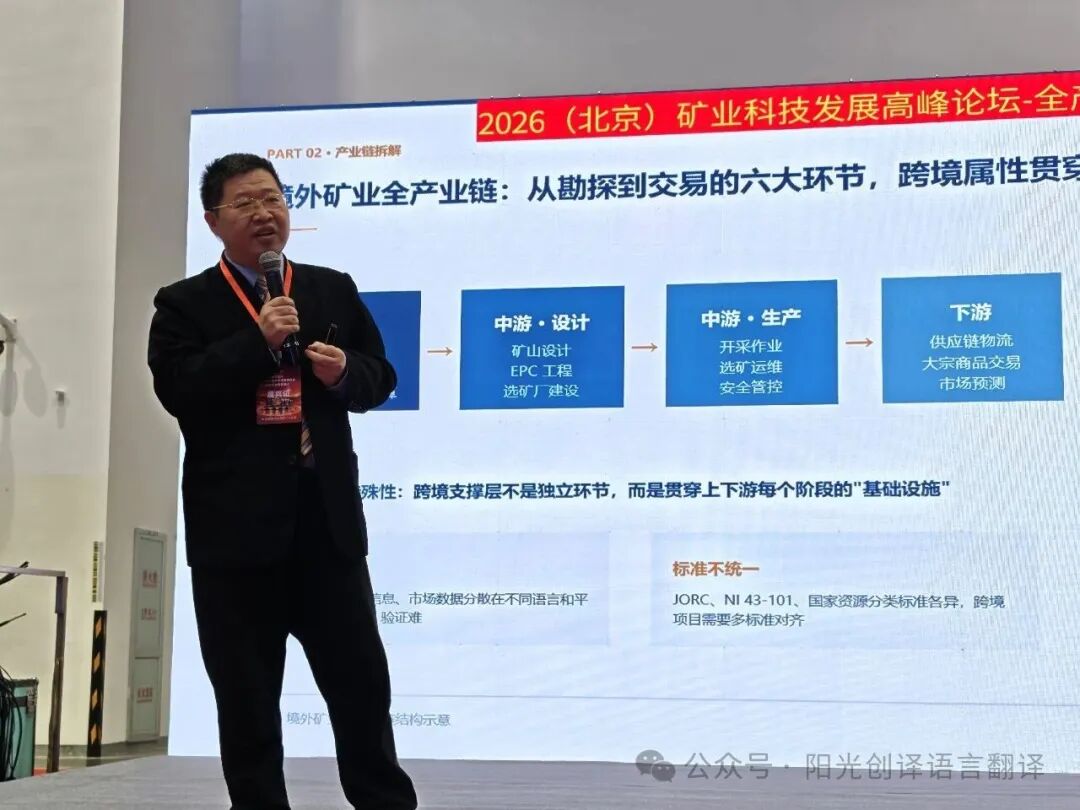
Dr. Lü Guo of Suntrans delivering his keynote speech at the Whole-Industry-Chain Forum of the 2026 (Beijing) Mining Science and Technology Development Summit Forum
01 Going Global Has Entered the "Deep-Water Zone"
In the past two decades, "going global" was mostly about acquiring resources and securing equity stakes. Today, Chinese enterprises must not only "go out" to obtain resources, but also "blend in" — under the quadruple pressure of geopolitics, policy, technology, and cost, whoever can develop overseas projects with lower risk and higher efficiency will hold the resource initiative for the next decade.
Dr. Lü Guo offered a key observation: every link in overseas mining is at once a "geological engineering problem" and an "international communication problem."
Where an ore body lies is a geological question; but how a host country's mining law is amended, how environmental permits are obtained, how community agreements are negotiated, and how cross-language due diligence materials are reviewed — these are all international communication questions. In the past, the two kinds of problems were handled separately: the former was left to engineers, the latter to translators and legal counsel, resulting in low efficiency and poor coordination.
The advent of AI has, for the first time, made it possible to connect these two lines simultaneously.
02 A Complete Industry Chain: Six Links
To understand the value of AI, one must first see what overseas mining actually consists of. Dr. Lü Guo broke it down into a complete value chain of six links, each of which can be reconstructed by AI.
1. Exploration — remote-sensing big data to lock onto exploration targets; 2. Feasibility and investment — resource modeling and country-risk assessment; 3. Mining and production — autonomous trucks and predictive maintenance; 4. Mineral processing and smelting — digital twins to optimize flotation; 5. Trading and logistics — price forecasting and logistics scheduling; 6. ESG compliance — carbon monitoring and risk early warning.
More importantly, above these six links there is an "enabling layer" running through the whole chain: data infrastructure, cross-language and cross-cultural knowledge, and international compliance and convention networks. It is not a standalone link but the infrastructure supporting the operation of all links — and it is precisely where overseas projects most easily get stuck, and where professional capability is most needed.
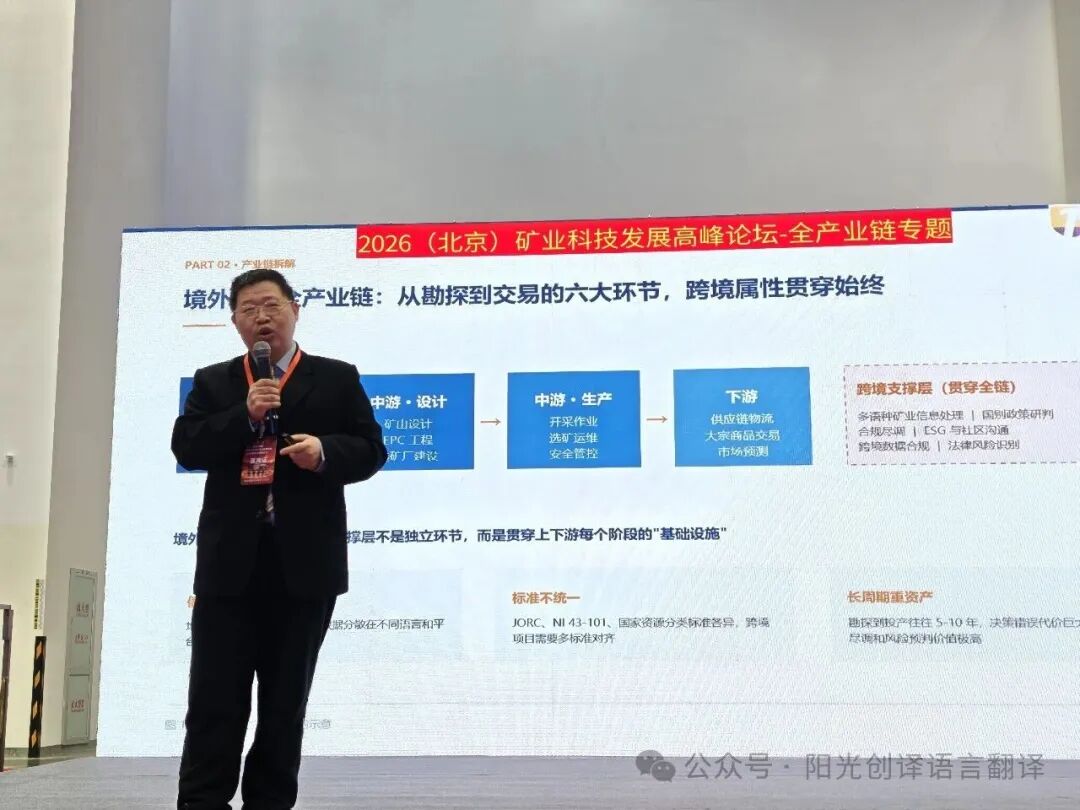
Dr. Lü Guo of Suntrans delivering his keynote speech at the Whole-Industry-Chain Forum of the 2026 (Beijing) Mining Science and Technology Development Summit Forum
03 The AI Market: From Demonstration Projects to Scale
AI in mining is not a concept — it is a fact that is happening. According to MarketsandMarkets, the global AI in mining market is expected to grow from about USD 260 million in 2025 to USD 993 million by 2032 — nearly quadrupling in seven years, with a compound annual growth rate of about 21.1%.
The growth is driven mainly by three areas: autonomous haulage fleets, predictive equipment maintenance, and the rapid penetration of generative AI in geological and engineering documentation. This means AI is no longer a "novelty" for mining giants but is becoming a "standard tool" entering large-scale production.
04 Seven Links, Reconstructed by AI One by One
Dr. Lü Guo organized AI's application points into seven enabling links, each backed by real-world cases.
1. Exploration: from "experience and luck" to "probability-based prediction." AI identifies subtle surface alteration and structural anomalies invisible to the human eye through satellite and drone imagery, integrates gravity, magnetic, electrical, and geochemical data into three-dimensional underground models with uncertainty quantification, and outputs ranked drill targets with confidence levels. The benchmark case is KoBold Metals, whose exploration algorithms discovered the high-grade sediment-hosted Mingomba copper deposit in Zambia, and in recent years have locked onto lithium exploration targets in Namibia, the Democratic Republic of the Congo, and Quebec, Canada.
2. Feasibility studies and investment decisions: from "gut-feel IRR" to computable, traceable risk. Resource and economic modeling, country-risk quantification, M&A target screening, and intelligent document review give investment decisions a quantitative basis. What is especially critical: a single overseas M&A deal may involve thousands of due diligence documents — geological reports in English, mining-rights laws in local languages, environmental permits, community agreements. Manual translation and review used to take months; AI translation combined with large-language-model extraction can compress the cycle to weeks.
3. Smart mining and autonomous haulage: freeing "people" from dangerous and remote sites. Rio Tinto has deployed 300 autonomous trucks across 10 mines in Western Australia, remotely operated from an operations center in Perth, improving effective fleet utilization by 15% and hauling about 4.8 billion tonnes of material in total. The implication for overseas projects is even more direct: in mining areas of Africa and Central Asia where labor is scarce and safety risks are high, autonomous trucks, remote drills, and predictive maintenance are not merely efficiency tools — they are a fundamental solution to "can't recruit, can't retain, and costly safety accidents."
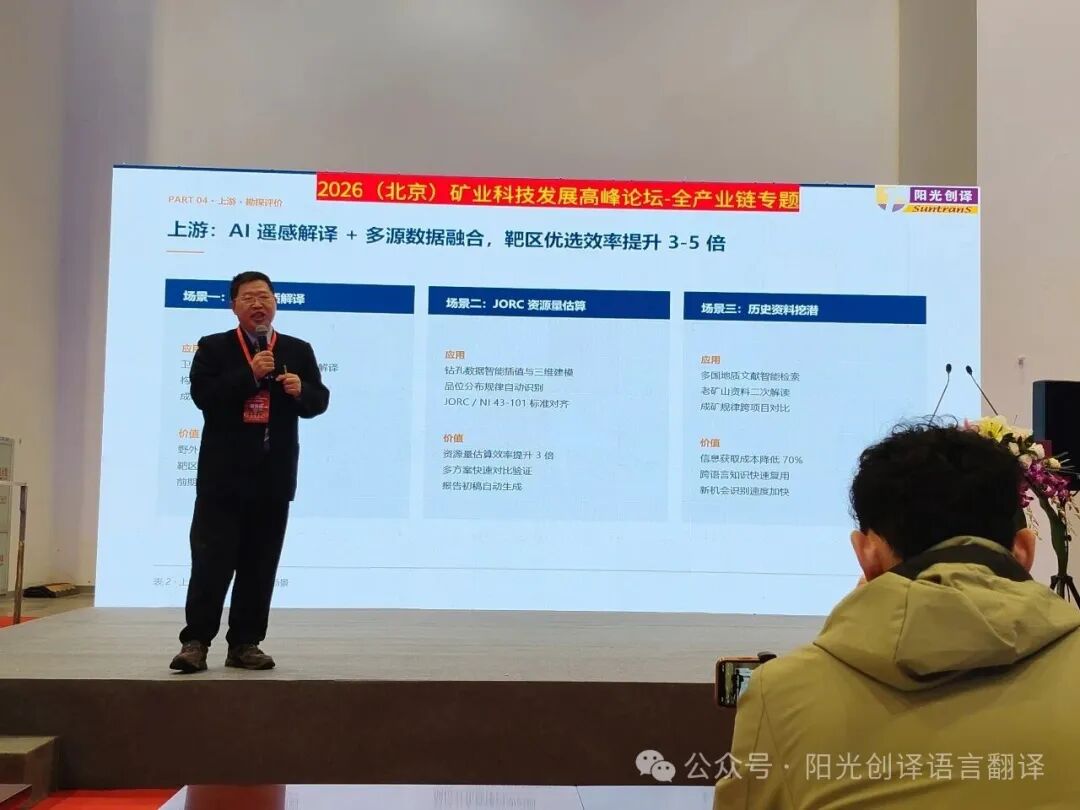
Dr. Lü Guo of Suntrans delivering his keynote speech at the Whole-Industry-Chain Forum of the 2026 (Beijing) Mining Science and Technology Development Summit Forum
4. Mineral processing and smelting optimization: squeezing out profit tonne by tonne. AI reads real-time signals from mills and flotation cells via DCS, PLC, and SCADA systems, builds nonlinear process models with machine learning, and dynamically gives optimal setpoints for air flow, reagents, and grinding density. IntelliSense.io has already implemented real-time AI control at a large copper mine in South America (with more than 120 flotation cells). In a concentrator handling tens of millions of tonnes, every 0.1 percentage-point gain in recovery rate is a considerable profit.
5. Supply chain and trading: more accurate, cheaper, more resilient. Integrating macroeconomic, inventory, and geopolitical signals assists timing and hedging decisions for copper, gold, lithium and other commodities; optimizing the coordination of mine–rail–port–fleet scheduling reduces in-transit inventory and demurrage; intelligent review and multilingual processing of letters of credit, customs declarations, and inspection documents shortens settlement cycles. A tonne of copper concentrate travels from an African mine to a Chinese port across borders, languages, currencies, and regulations — whoever can smooth out the information and time gaps along this chain can keep an extra margin of profit amid price volatility.
6. ESG and country risk: exposing "invisible mines" before they detonate. Automatic carbon accounting, remote-sensing monitoring of tailings ponds and ecological restoration, real-time capture of local-language media and community sentiment to give early warning of brewing conflicts, and tracking of changes in host countries' mining laws and taxes. The biggest risks in overseas mining often lie not in the mine itself but outside it — a single amendment to a local mining law, one community protest, or one geopolitical confrontation can bring a project to a standstill.
7. Cross-language knowledge and international cooperation: AI as the language and knowledge bridge for Chinese mining to "go out and blend in." This is what Suntrans has been doing for more than twenty years: providing multilingual simultaneous interpretation and technical document translation for mining conferences, the PDAC Convention, and foreign-aid training programs, with a service footprint covering more than 30 countries. The company has built multilingual terminology knowledge bases around international resource and reserve standards such as JORC and NI 43-101, and safeguards quality through a model of "generative AI for efficiency + professional geological translation review."
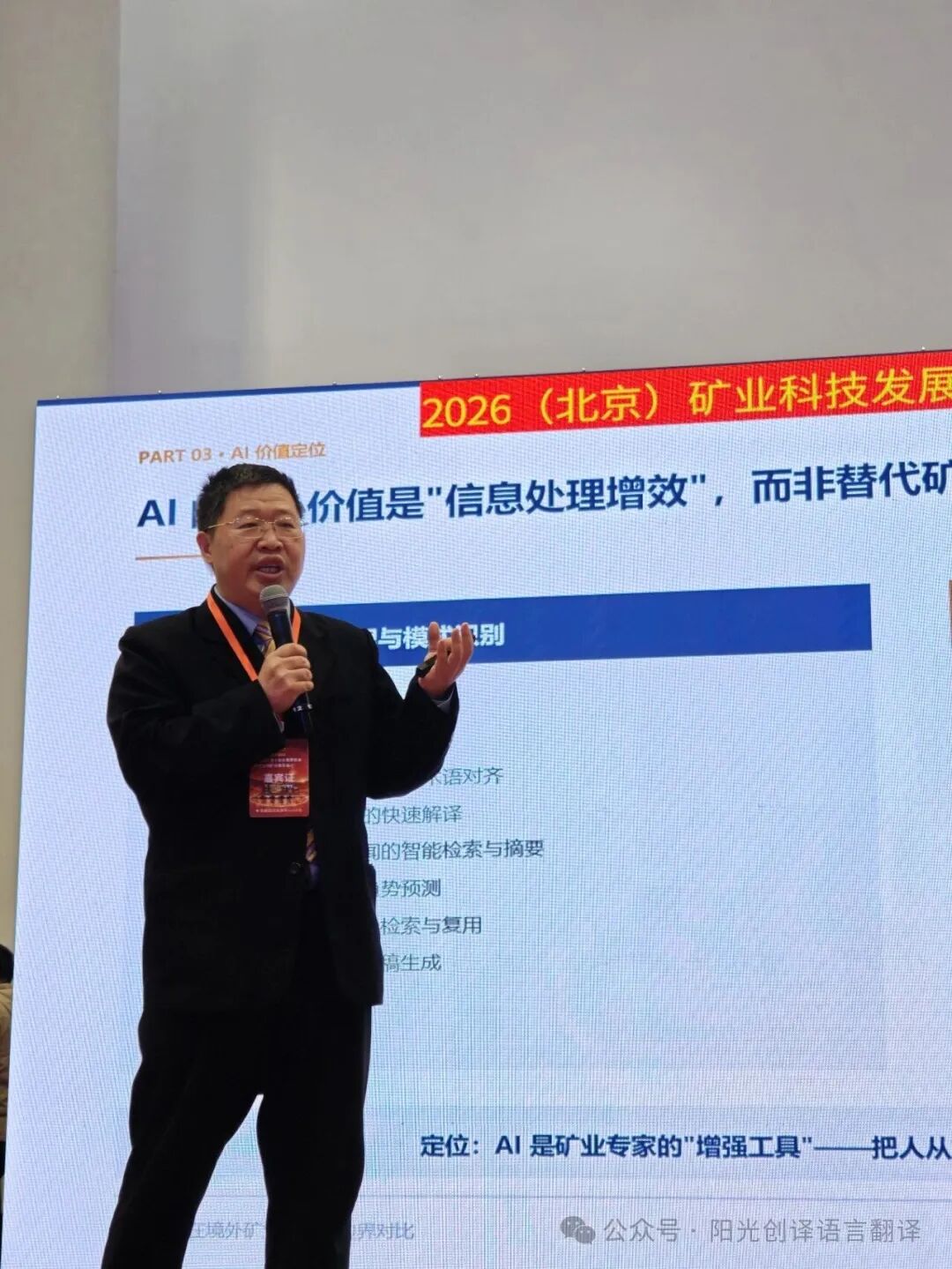
Dr. Lü Guo of Suntrans delivering his keynote speech at the Whole-Industry-Chain Forum of the 2026 (Beijing) Mining Science and Technology Development Summit Forum
05 Seven Links Are Not Islands: The Data Flywheel Spins Ever More Accurate
Dr. Lü Guo particularly emphasized one point: these seven links are not isolated. Geological, remote-sensing, production, equipment, processing, assay, trading, logistics, multilingual document, and public-opinion data ultimately converge into a unified data foundation, forming a mining AI middle platform and industry large models — making exploration more accurate, decisions faster, mining cheaper and safer, processing recovery higher, and risks exposed earlier.
Production results, in turn, feed back into the models, forming a "data flywheel" — data flows through the whole chain, and the more the models are used, the more accurate they become. This is the key step for AI to upgrade from a single-point tool to an "operating system," and the core value that distinguishes it from traditional software.
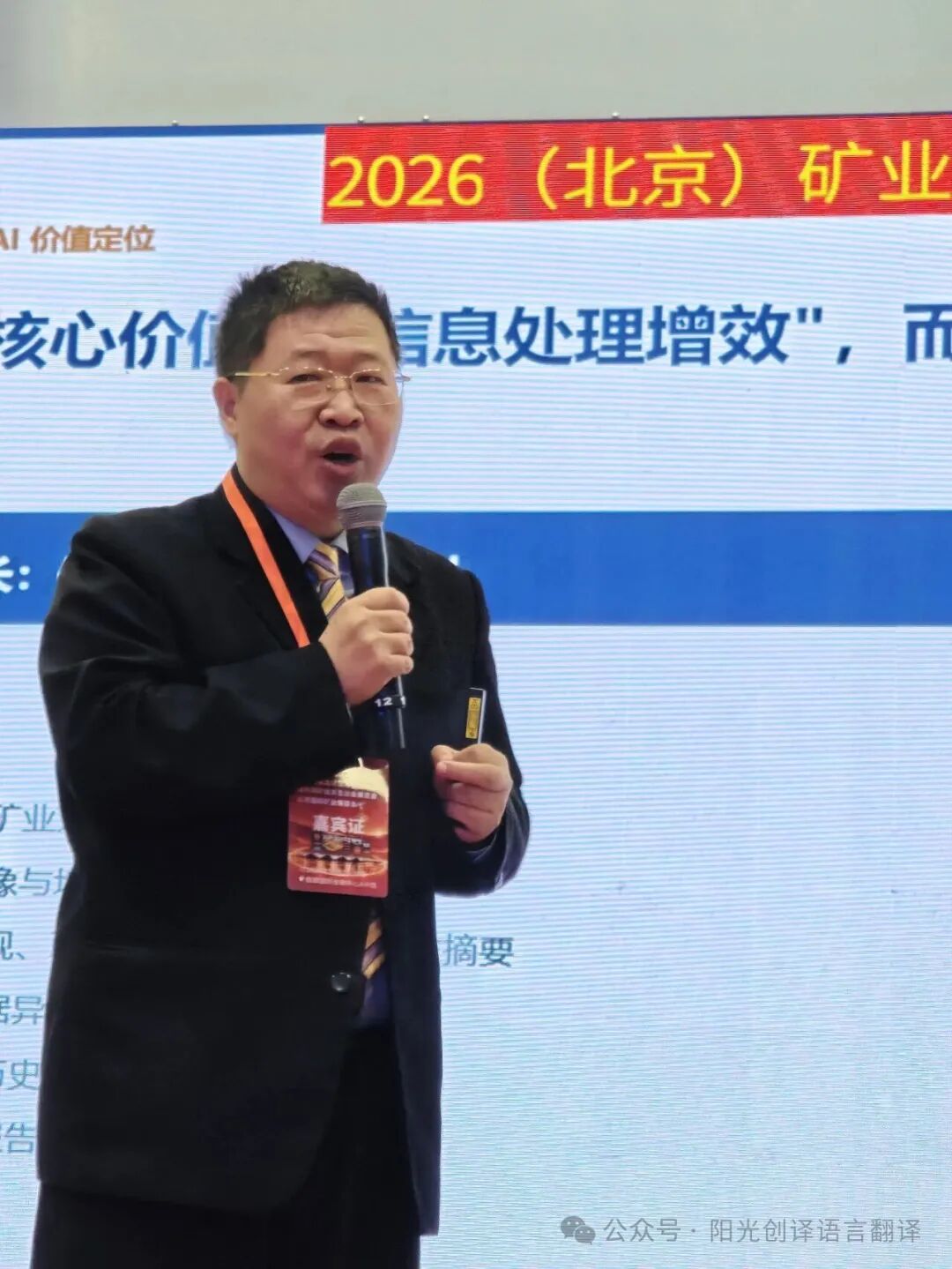
Dr. Lü Guo of Suntrans delivering his keynote speech at the Whole-Industry-Chain Forum of the 2026 (Beijing) Mining Science and Technology Development Summit Forum
06 Three Hurdles: Staying Clear-Eyed Amid Optimism
However, the report does not shy away from reality. For AI to land in overseas mining, several hurdles must be crossed.
Hurdle one: data silos and data quality. Exploration, mining, and processing data are scattered across different systems; historical data is missing and formats are inconsistent — "garbage in, garbage out."
Hurdle two: scarcity of interdisciplinary talent. People who understand geological engineering, data science, and the local language and culture at the same time are few and far between.
Hurdle three: geopolitics and data compliance. Host countries are tightening requirements on data sovereignty, cross-border data flows, and localization; cloud and computing-power deployment must put compliance first.
There is also a mismatch between investment and cycles — AI requires large upfront investment, while mining is affected by price cycles, so it is necessary to start with the links of highest certainty.
The response strategy is pragmatic: do not try to do everything at once; start with single points that have good data foundations and clear input–output results, then gradually connect them into a system.
07 Three Steps: From Single-Point Pilots to a Global Intelligent Ecosystem
Based on the above judgments, the report lays out a clear roadmap for action.
Near term (0–1 year) · single-point pilots. Select one or two links with high input–output ratios for rapid validation — such as AI optimization of processing flows, predictive equipment maintenance, and cross-language document and conference services — and build internal confidence with visible results.
Mid term (1–3 years) · data integration. Build a unified data foundation and geological knowledge graphs, connect exploration–mining–processing data, develop country-risk and compliance databases, and cultivate an in-house interdisciplinary team.
Long term (3–5 years) · intelligent ecosystem. Form an AI-plus-cross-language knowledge network, achieve whole-chain intelligent decision-making, connect Chinese and foreign mining rights and capital, and build global resource discourse power.
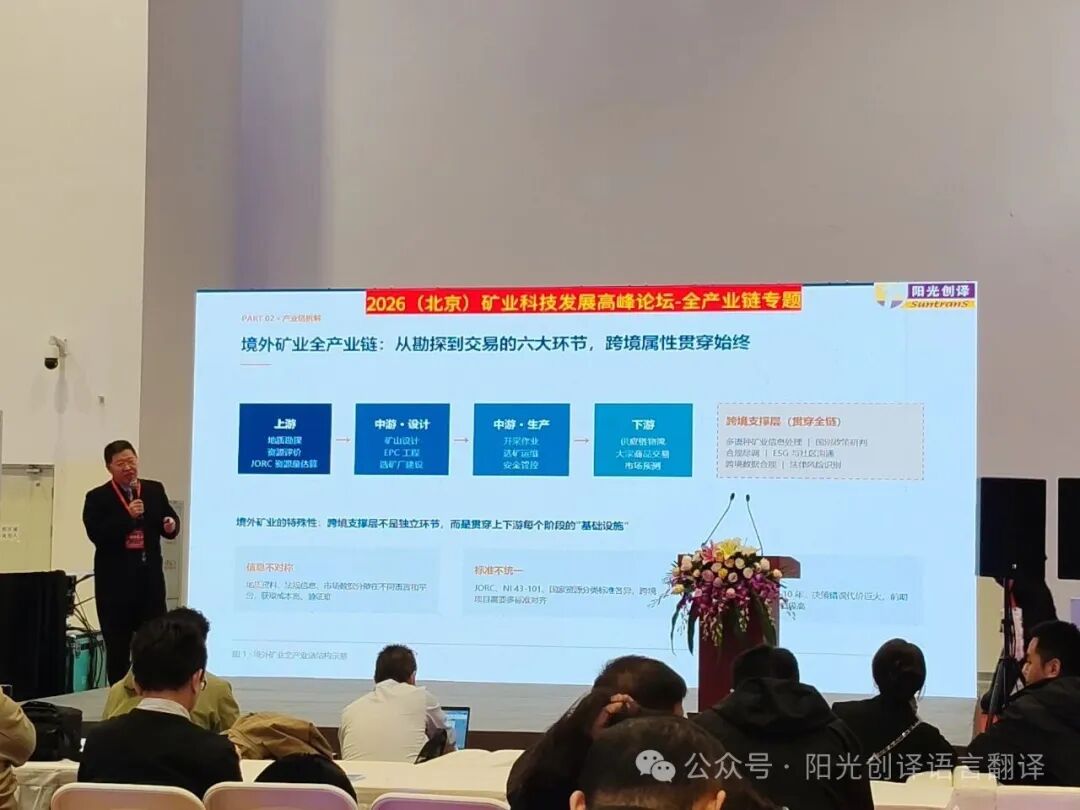
Dr. Lü Guo of Suntrans delivering his keynote speech at the Whole-Industry-Chain Forum of the 2026 (Beijing) Mining Science and Technology Development Summit Forum
Conclusion Mining Professionals Who Use AI Will Win the Next Decade
To return to the judgment at the beginning of the report: China's mining industry has entered the deep-water zone of "going global." The real competition is no longer about who obtains more resources, but about who can develop overseas projects with lower risk and higher efficiency.
The value of AI is to connect the two lines of "geological engineering" and "international communication" at the same time — turning signals scattered across dozens of languages and hundreds of information sources into a monitorable, decision-ready picture; and handing the repetitive information processing in due diligence, exploration, processing, and trading over to machines, so that people can focus on more critical professional judgment.
Of course, it is not a master key — data must be integrated, talent must be cultivated, and compliance must come first; everything should proceed at its own pace. But the direction is clear: AI will not replace mining professionals — but mining professionals who use AI will win the next decade.
Profile
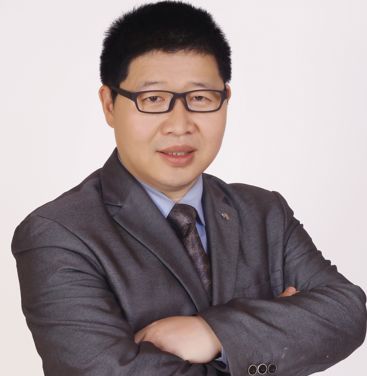
Dr. Lü Guo, Beijing Suntrans
Lü Guo, male, born in 1977, ancestral home in Dunhuang, Gansu Province, now works in Beijing. He is a postdoctoral researcher from Peking University, Chairman of Beijing Suntrans Language Translation Co., Ltd., and CEO of Suntrans Consulting LLC in the United States. He is mainly engaged in research in the mining and energy field as well as related simultaneous interpretation, mining consulting, and convention and exhibition services.
Lü Guo holds a doctorate in Mineralogy, Petrology, and Mineral Deposits from China University of Geosciences (Beijing). He studied at the University of Miami in the United States during his doctoral program and completed his postdoctoral research in geology at Peking University. He previously worked part-time at BHP Billiton, the world's largest mining company in Australia, and at the Overseas Mineral Resources Strategy Research Office of the China Geological Survey. In 2008 he founded Beijing Suntrans Language Translation Co., Ltd. (Suntrans Translation), and in 2011 he founded Suntrans Consulting LLC in New York, USA. His mining translation and consulting experience spans more than 40 countries.
Lü Guo has participated in compiling and translating mining investment guide book series for various countries as well as numerous works in geology and mining, and has provided translation services for many years for major conferences and forums such as the China Mining Conference & Exhibition, the PDAC Convention of the Prospectors & Developers Association of Canada, the China-ASEAN Mining Cooperation Forum, the Iron Ore Forum, the Ministry of Natural Resources, the China Geological Survey, and the foreign-aid training programs of the Ministry of Commerce. He has also provided geological and mining interpretation and translation in more than 40 countries and regions — including Canada, the United States, Uganda, Rwanda, Ethiopia, Hong Kong (China), Pakistan, Sri Lanka, Singapore, France, Costa Rica, Ecuador, Malaysia, and Iran — and has participated in the acquisition of many large international mining projects. As of 2023, he had organized and chaired 9 sessions of the "China International Mining Development Summit Forum" and 5 sessions of the "China International Translation Summit Forum."
Education
1. January 2012 – June 2016: Department of Geology, School of Earth and Space Sciences, Peking University — postdoctoral researcher in Geology;
2. August 2008 – December 2009: jointly trained doctoral student at the University of Miami (USA), specializing in geomicrobiology;
3. July 2006 – September 2008: jointly trained doctoral student at the Institute of Microbiology, Chinese Academy of Sciences, specializing in geomicrobiology;
4. 2006 – 2011: China University of Geosciences (Beijing) — Doctor of Science in Mineralogy, Petrology, and Mineral Deposits;
5. 2003 – 2006: China University of Geosciences (Beijing) — Master of Science in Mineralogy, Petrology, and Mineral Deposits;
6. 2001 – 2004: Lanzhou University — second bachelor's degree in English Education;
7. 1996 – 2000: Northwest Normal University — Bachelor of Science in Biology.
Work Experience
1. February 2008 – present: Beijing Suntrans Language Translation Co., Ltd. — Chairman, translator, and mining consultant;
2. May 2011 – present: Suntrans Consulting LLC, New York, USA — CEO;
3. December 2009 – May 2010: Development Research Center of the China Geological Survey — Overseas Mineral Resources Strategy Research Office;
4. April 2006 – August 2008: BHP Billiton (Australia) — porphyry copper exploration and translation;
5. September 2000 – June 2003: Dunhuang High School, Gansu Province — high school English teacher.
Professional Affiliations
1. 2019 – present: Deputy Secretary-General of the Tectonophysicochemistry Professional Committee, Chinese Geophysical Society;
2. 2018 – present: Deputy Secretary-General of the Resource Industry Economics Professional Committee, Geological Society of China;
3. 2020 – present: Deputy Secretary-General of the Mining Professional Committee, China Association for the Promotion of Asian Economic Development;
4. 2016 – present: Translation trainer, Translators Association of China;
5. June 2016 – present: External supervisor for MTI students, School of Liberal Arts and Law (Foreign Languages Department), China University of Mining and Technology (Beijing);
6. December 2020 – present: External supervisor for MTI students at the School of Foreign Languages of Northwest Normal University and the School of Liberal Arts and Law of China University of Mining and Technology, and Changchun University; English teacher at the School of Foreign Languages, West Anhui University.
← Back